resources, saving money, travel tips

Free Substitutions for Everyday Expenses

What would you rather spend your money on: a super-amazing trip of a lifetime, or day-to-day costs? Of course you want to be able to live well, but when you’re saving for a trip or other big goal, you may realize that you’re spending money on things that you don’t need to spend money on. But going on a spending freeze does not mean you have to stop enjoying the things you love. It just means you have to go about things differently. Here are twenty-one expenses that many people have, along with some cost-free substitutions.

Instead of paying for network television… many channels upload some of their popular shows onto their website or onto the free version of Hulu. ABC, CBS, and A&E are just some of the channels whose websites you can visit for free shows. Yes, this does mean watching on your computer, but if you really want to watch on a bigger screen, you can consider a one-time cost of buying a cord that will display your computer screen on your television. If your favorite show is not offered online, see if a friend who has that channel would be willing to host a weekly screening night.

Instead of going out to dinner… enjoy time together by cooking a meal at home. Begin by looking up a recipe (for free online, of course) for a dish you’ve never made or tasted before. If you don’t have the ingredients at home, make shopping at the grocery store part of your dinner date! This can be your opportunity to try out crazy cooking methods and use your finest dinnerware. You can even make it formal by busting out the cocktail dress or suit and tie! I realize that technically, this still costs money as you’re buying the ingredients, but you need to eat anyway, right? As long as you’re not purchasing new cookware or exotic foods, this memorable night in can cost just as much as any other meal you cook at home.

A former roommate and I spent an evening shaping and baking pretzels!

Instead of spending money on movies… some production companies have movies available for free online, often available to stream straight from YouTube! There are also dozens of websites dedicated to providing free documentaries to the public. Now this takes care of your movie subscription services, but what about the movie theater experience? If you’re a business owner, ministry leader, or even a blogger, not only can you attend movie screenings for free, but you can see them before they come out. Since getting into the Lifeway Films advanced screenings, I’ve been able to see several free movies over the past few years in the best theaters in town!

Instead of buying books… the obvious recommendation would be the library, but I realize that it is not a viable resource to everyone. Even if you do have a local library, it may not have the kind of selection you want. Many communities have some sort of book exchange, which could be anything from a mailbox on the sidewalk, to a bookshelf in a store, to a whole building filled with free books! Sure, you may have to give up some books, but in return you can get an entire selection of new books! If your area doesn’t have a book exchange, consider starting one up! A great way to get brand-new books is to enter contests, often sponsored by either the author or the publisher. Even if there are no advertised contests, a nice fan letter sent to the author may be returned by free books- possibly autographed!

Instead of shopping online Craigslist, eBay, and other online stores… you can look for a local free group on Facebook. This has a similar philosophy to the Freecycle website, but because it’s on a regularly-accessed social network, it tends to be better utilized. Once you join your local group, all you have to do is either post what you’re looking for, or post something that you want to give away. Your neighbors will then be able to help you out in your endeavor. In addition to this, never underestimate the good old-fashioned method of telling your friends what you’re free-shopping for!

When I was moving, someone on a local Facebook group was fortunate enough to take this custom-made bed out of my hands for free!

Instead of purchasing clothing… you can try trading with friends. Of course, this only works if your friends have similar size and style. You can also take up sewing and upcycle your current threads. You can prolong the life of your clothes by patching up holes, or you can give your wardrobe a complete makeover and turn one item of clothing into something else entirely. If you get creative, you can turn a t-shirt into a skirt, or a skirt into a scarf!

I upcycled twelve camp t-shirts into a no-sew blanket!

Instead of buying school books… share with a friend who is also taking the class, or borrow from someone who took the same class the previous semester. If you don’t have these kinds of connections, many school libraries, and sometimes local public libraries, carry the current school books and allow students to borrow them for a short time as needed. If you can, contact the instructor before the class starts and ask what books are actually required. (Sometimes what the school thinks is read and what the instructor actually assigns can be different.) All the above options typically only work for books that are not read on a daily basis. You probably will have to buy some books, so find them used for as cheap as you can online, and after your class ends you can sell them directly to another student for almost the same amount that you bought it for. Even though it requires putting a little money down, many students find that this method will help them break even in the end.

Instead of purchasing souvenirs… take lots of pictures. Go geocaching and trade for an item that will remind you of the area. Keep a travel journal. Collect your ticket stubs, itineraries, and brochures. Find rocks, shells, or other natural objects and label where you found them (make sure this is legal before taking them). The souvenirs you want to buy are likely made overseas and simply stamped with your destination’s name. Another bonus of free mementos is that they often better represent your vacation spot.

The only "souvenirs" my friends and I have from this hike are the photos we took and the trinkets we traded in the geocaches.
The only “souvenirs” my friends and I have from this hike are the photos we took and the trinkets we traded in the geocaches.

Instead of giving pricey gifts… find a way to spend time instead of money. Newlyweds may need a house- or pet-sitter while they’re on their honeymoon. First-time parents often need help catching up on housework and yard work, or getting the nursery ready. Not-first-time parents may be looking for babysitting for their older kids or meal preparation. You could also get crafty and make a unique, quality gift out of items you already own. Used gifts are sometimes okay as long as it’s a gift from the heart, such as an antique family heirloom being passed down. Just make sure that your free gifts don’t come across as stingy or unwanted. In some cases it is better to buy a (couponed, on-sale) gift for a dear friend than hoarding away a few extra bucks.

Instead of paying for a pet… pet-sit for your friends and neighbors and you could get paid to snuggle with a furry friend! You can also get your animal fix by volunteering at, or even just visiting, an animal shelter. You could also volunteer or work as a farmhand and be exposed to a variety of creatures! Remember that a pet does not typically fit into a traveler’s lifestyle. You either have to hope to find pet-friendly lodging and camps and pay the extra pet fee, or pay for a kennel or pet-sitter back home. This is a huge expense in addition to the regular expenses of food, immunizations, etc.

Not having pets didn't stop me from playing with my Nebraska neighbor's puppy!
Not having pets didn’t stop me from playing with my Nebraska neighbor’s puppy!

Instead of buying paper products… use reusable! Many people already have plenty of towels and other paper product replacements already in their homes, but even if you don’t have enough cloth towels to replace paper towels, you probably have enough material to make your own. Bandannas can make festive napkins. Old t-shirts can be cut to any size of rectangle for whatever you repurpose them as. Even old socks are great for scrubbing and wiping down when cleaning. If you don’t feel like washing rags, use a small piece of salvaged cloth for the task and then throw it away.

Instead of purchasing periodicals… think about why you’re really reading it. If you only buy magazines to read one or two certain sections, search for those topics on Pinterest and you’ll get thousands of pins linking to articles on that topic. Remember that lots of magazines publish their most popular articles online for free. As for the newspaper, I’m not sure why they’re even still in print, but you can find all that news online and immediately after it happens. If you want something you can hold in your hands, there are free subscriptions, or at least trial issues, to many magazines. They’re getting rare, but they’re still out there! Finally, utilize free magazine racks, check out magazines at the library, and trade magazines with friends. As long as it’s your first time reading it, who cares if the magazine is several months old?

Instead of paying to exercise… work out at home and on the road. If you are traveling and there is no price difference between an accommodation with a pool or workout room and an accommodation that doesn’t offer any workout equipment, choose the place where you can be more active. As long as you have decent walking or running shoes, you can turn any place into a gym. Motivate yourself to exercise more at home by doing small, vigorous tasks such as unloading groceries, walking to the mailbox, or vacuuming. Also, there are many workout videos available for free online streaming. Some may recommend simple exercise equipment, but you can replace a yoga mat with a towel and use water bottles filled with rocks instead of weights.

You can save money on exercise AND transportation if you decide to walk EVERYWHERE like I did on my Niagara Falls trip.

Instead of buying shipping material… save the packaging from items shipped to you, cover your address with a new label, and ship it out! If your shipment requires cushioning, you can use already-used wrapping paper, the contents from a paper shredder, or any other needs-to-be-recycled paper from around the house. Oh, and you can also save the bubble wrap that gets sent to you for later use. You can even place fragile items in the center of the package and surround it with other softer, non-fragile items. If you plan to ship through Priority Mail at the US Post Office, don’t even bother trying to find packaging. All post offices provide Priority Mail boxes, envelopes, tape, and address labels for free. Whenever you have to mail just a small envelope, consider if you could send the information online instead. If you’re careful about your shipments, you can get away with only spending money on stamps!

Instead of buying video games and gaming devices… I’m not entirely sure why the gaming industry is so big when there are so many games you can play for free. If you have a smart phone, you’re probably already aware that you can download free gaming apps. There are also many free online gaming sites with many different genres. And a bonus to parents and students: there are a ton of fun, free games that are also educational! But, in my opinion, video games will never be as fun as traditional board games. You probably have a few hiding in the back of your closet; why not pull them out and play a few rounds?

Instead of paying for a hotel room… don’t do it! I understand the merit behind hotels and motels, but I believe that they are used far more than they need to be. Read my article on ten alternatives to hotels. All of them are cheaper than a hotel, and several of the suggestions are absolutely free!

Lounging in a lodge... that we stayed a night in FOR FREE!
Lounging in a lodge… that we stayed a night in FOR FREE!

Instead of an expensive friends’ night on the town… enjoy a night in! Have a potluck (depending on what dish you make, you could actually spend less than you would for your own personal dinner), and spend the night watching movies, playing games, or simply catching up. If you volunteer to host a night like this, your friends will probably realize that they can also host low-key, low-cost get-together at their house. There will be fewer pricey nights in town and more times celebrating friendship in the comforts of each other’s homes.

Instead of spending money on music… many cities of decent size will have free concerts going on at least a few times per month. These may be small, one-man shows inside coffee shops, but this could be great as you’ll really get to know the artist. For in-home entertainment, Amazon often offers free downloads, and up-and-coming artists will give some songs away on their website to get people interested in their music. Of course, if you don’t care about owning music, you have plenty of options for listening to music, such as YouTube, Pandora, Spotify, and, of course, the traditional radio.

A few years ago, I bummed a ride with friends to South Dakota to attend Lifelight, a huge, FREE music festival!

Instead of buying snack foods… go foraging! First study up on different types of edible plants that are native in your area, and which ones can be poisonous if ingested. Then go into the forest or perhaps even your backyard or another area that doesn’t get sprayed with pesticides or herbicides. Some leaves can be used as spices or to make herbal tea, and there are plenty of other nuts, flowers, grasses, fruits, and roots to enjoy. Foraging may not fill an empty belly, but it will give you a greater appreciation for food and hopefully these wild, organic options will lessen your consumption of junk food!

Instead of spending money on sporting events… watch the kids! In most communities, sporting events for children in middle school and under are free to attend. Even if you don’t have any kids in sports, this is an easy, free way to show your support in the community. Check with the local schools and Little League for game times. You could also check with community clubs, churches, and other organizations that may play intramural sports and ask if you can come watch a game. Local games can be just as interesting as the big leagues. If you’re set on seeing the professionals play and you don’t get any free sports channels, you can stream some games online.

Even some college games are free! When Penn State Men's Volleyball came to challenge Ohio State, it didn't cost me anything to cheer on my cousin!
Even some college games are free! When Penn State Men’s Volleyball came to challenge Ohio State, it didn’t cost me anything to cheer on my cousin!

Instead of paying a monthly phone bill… make phone calls using Google Voice. If you’re in the United States, you can call for free to any other phone number in the United States. However, there are some caveats. First of all, you need to be connected to the internet, which usually isn’t a problem with the prevalent free WiFi and the fact that so many people use data plans. The worst part is that you cannot provide a number for people to call you, and you cannot leave voicemail. But since Google Voice will take care of most of your outgoing calls, consider getting a cheap pay-as-you-go phone for when you need to receive calls and leave messages. You can get a Tracfone for as little as $10 (they even have smart phones for a slightly higher price), and all of their phones come with at least 10 free minutes upon activation. If you prefer texting, there are many websites that will allow you to text over their website, and will even provide recipients with a temporary number for them to text you back.

What swaps have you made to save money for your adventures?

Accommodations, saving money, travel tips

9 Ways to Pay (Almost) Nothing for Accommodations

We all know there’s no such thing as a free ride, but is there such a thing as a free bed? For most travelers, accommodations is their number one trip expense, but it certainly doesn’t have to be that way. You just have to follow this one simple rule: Never stay in a hotel! Hotels provide little more than a bed and a bathroom, and they do nothing in adding a cultural or community aspect to your trip. Instead, try out one of these accommodation options- and save a bunch of money while you’re at it!

1. Friends and Relatives: This is the easiest and cheapest option. All you have to do is figure out who you know that lives near your destination, and call them up. If they’re available, this is a great option because it offers so much more than just a place to sleep. Every time I’ve stayed with someone I know, they’ve offered me a ride, a meal, or even a city tour. Of course, everything depends on whether or not you know someone at your destination and if they’re available, and depending on how well you know them, you may feel as if you’re imposing on them. But this can be a great way to catch up with an old friend, and if you bring a gift from your hometown, it can serve as a unique cultural exchange.

Hostel Dorm Beds in Chicago
My hostel dorm bed at HI-Chicago

2. Hostels: If you’ve read any of my other posts,  you probably already know that I’m a big fan of hostels. This is ideal for the solo traveler, but even couples, families, and groups can save by staying in a hostel. Depending on location, they can range anywhere from $15-45 per person per night, but they’re always a fraction of the cost of a nearby hotel room. In addition, hostels typically provide a guest kitchen, breakfast, WiFi, a commons area, and some degree of concierge service. The cheapest option is to get a bed in a large dorm (which can be co-ed or gender-specific), but if you prefer, many hostels offer private bedrooms and family suites. To save even more, book through Hostelz.com.

Deborah's Guesthouse Bank in Kentucky
I stayed at “The Bank” Guesthouse in Northern Kentucky, where you can sleep inside an old vault!

3. Guesthouses: If you’re traveling as a family or other large group, this may be your least expensive option. At sites like airbnb.com or vrbo.com, you can book anything from a spare bedroom to an entire house directly through the owner. It’s hard to say what to expect from a guesthouse, because each one is so unique. You have to speak with the owner about what to expect, but one of the reasons that guesthouses are becoming increasingly popular is because they often offer all the comforts of home. Because guesthouses are so diverse, you can choose one that fits your needs and lifestyle best, from a downtown high-rise to a country cottage.

Click here to get $40 off an AirBnB stay PLUS $15 off an AirBnB experience!

Camp Rivercrest
Not only have I camped here, I lived here for two years!

4. Camping: If the goal from your vacation is to get away from it all, staying at a camp will definitely help! Campgrounds are always a low-cost option, and there are many primitive campgrounds that you can stay at for just a few dollars per night or even for free. It is true that the initial start-up costs for camping can be a bit pricey. You’ll need a sleeping bag, food, fire starters, and either a tent or a camper. However, some people convert their van or SUV to sleep in. Others will go to campgrounds where they can rent cabins, yurts, or other lodging, though this can up the price quite a bit. The best part is, once everything is set up, camping can be a vacation in and of itself.

couch
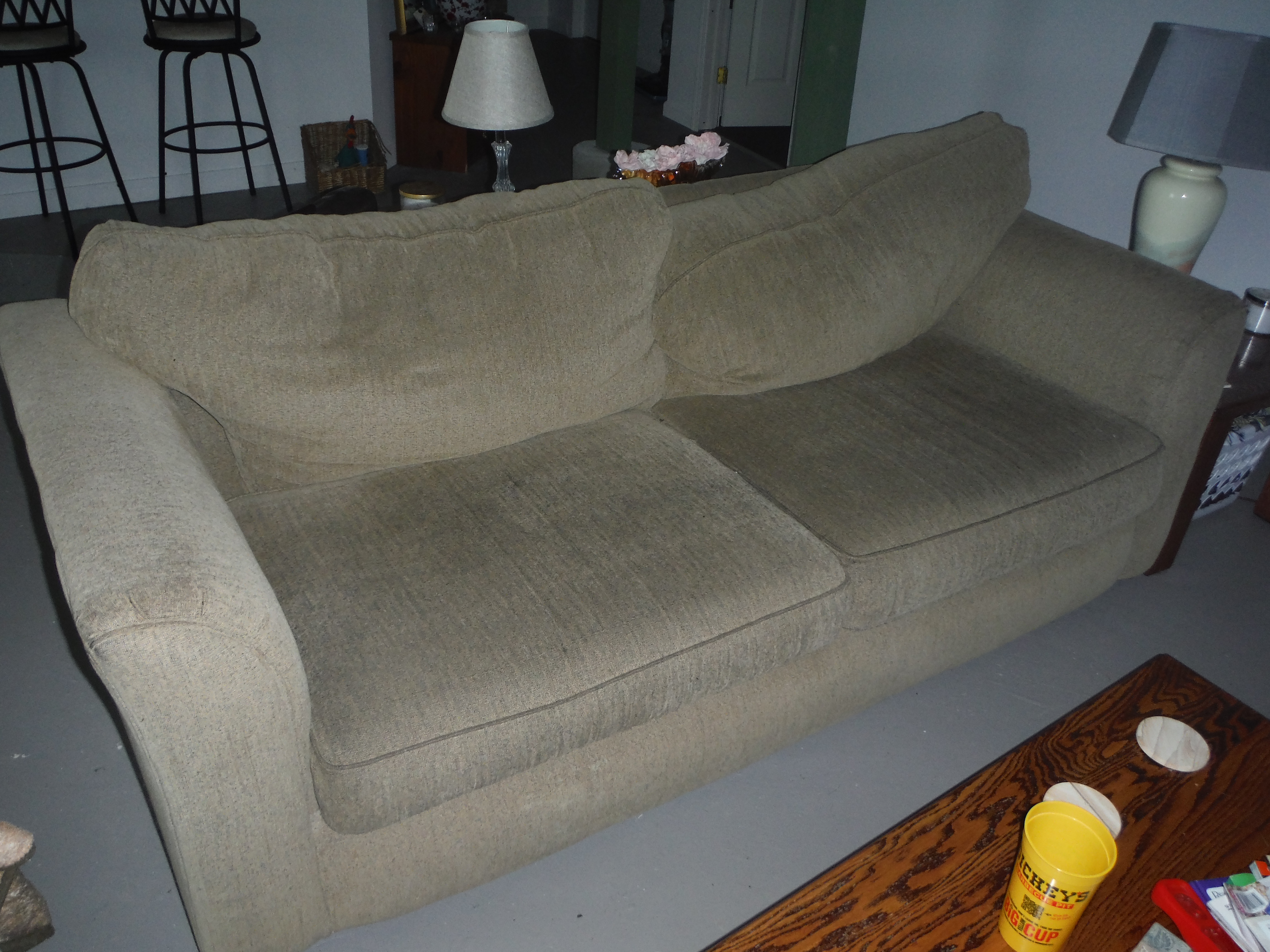
Although no one ever contacted me through Couchsurfing, several visitors slept on my old couch.

5. Couchsurfing: Couchsurfing is an online organization where people can offer travelers a place to spend the night. Although it could be sketchy and awkward to stay at a stranger’s house, you can get background checks and references, and it’s completely free. I’ll admit, while I’ve heard many positive experiences from others who’ve traveled this way, I don’t think it’s for me. But I do have a Couchsurfing account and I even used it once. I found the owner of a hostel who, instead of offering his couch, offered a free hostel bed for one night. By contacting him through Couchsurfing, I got my first night at a hostel for free!

Church with Long, Confusing Name
I’ve spent the night at several churches. This one in South Dakota was not one of them, but I thought it was funny that their name was so long, they needed two signs!

6. Convents and Churches: These nonprofit faith organizations are not typically thought of as accommodations, but some of them definitely are! Some convents and monasteries, especially in Italy and other European countries, help support their ministry by offering low-cost lodging to travelers. I didn’t know about this until recently, but I plan to try this out if I go to Rome! In any country, if you call ahead of time, you may find a church that can offer you a place to sleep, even if it’s on the floor of their fellowship hall (though some clergy may even offer up their homes!). Churches are more likely to open their doors to you overnight if you are traveling as a group and are of the same faith.

Volunteer in Posada de Amor Peru Orphanage
Volunteering at an orphanage in Cieneguilla, Peru, called Posada de Amor

7. Volunteer: I love volunteering while traveling because it gives me a more realistic understanding of what the area is like and gives me the opportunity to “give back” to the community for allowing me to visit. Some organizations will even provide their volunteers with freebies, such as meals, transportation, and, in some situations, lodging! You can search for causes you care about near your destination, or you can download Kirsty Henderson’s e-book, The Underground Guide to International Volunteering: For experiences that go beyond beaches and the backpacker trail. I’m in the middle of reading this book now, so stay tuned when I give you an update on what I think about it!

Overnight Greyhound Bus
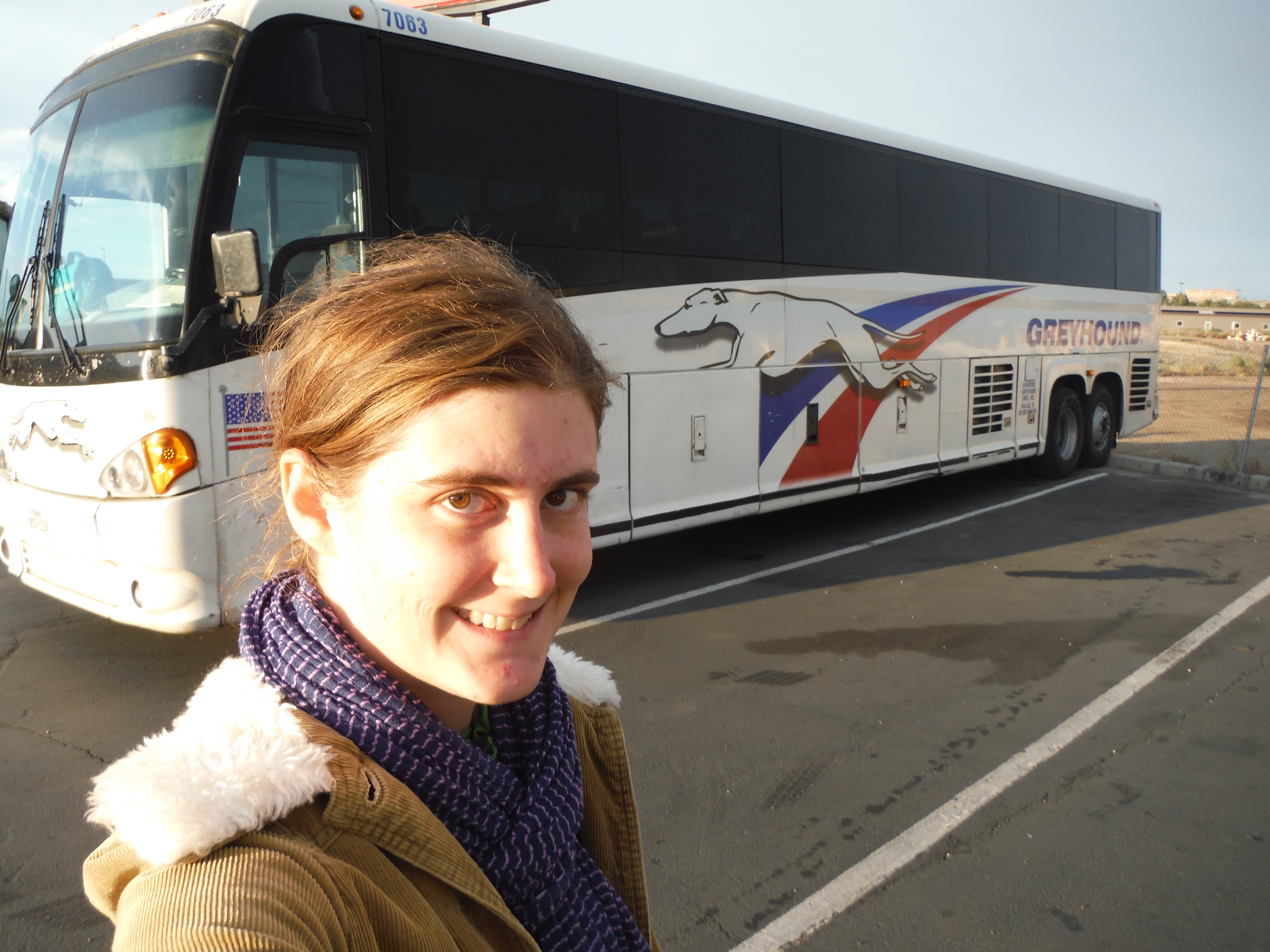
Taking a rest stop in Wyoming, right before I spent the night on this bus.

8. Take an Overnight Trip: Whether you travel by plane, train, or bus, be aware that you can also use these services overnight. It’s not the most comfortable way to sleep, and you’ll likely be woken up in the middle of the night, but at least it’s something! After all, riding the bus during the day costs pretty much the same as riding the bus at night, but at least you won’t have to pay for an accommodation that night. Airlines often even give discounts if you choose a “red-eye” flight! In my opinion, trains are the best way to sleep on transportation. In some countries, it’s required to pay a little extra for a sleeper car, but in other countries (such as the United States), you can choose to pay a lot extra for a sleeper car, or you can just pay for a standard train seat and sleep right there! (Trains tend to have more leg room, better-reclining seats, footrests, and quiet hours, so it’s almost, kind of like sleeping in a bed. If you’re driving, you can still apply this principle by either having one person drive while the other sleeps and switch off, or by parking in a large parking lot (such as Walmart) and sleeping there. (But know that not all Walmarts condone this and may even ask you to leave!)

Columbus Greyhound Bus Station
Resting up at the Columbus, Ohio Greyhound bus station

9. Sleep at the Station: This is more of a plan B, but it will do in a pinch. If you’re leaving the next morning, the airport, bus, or train station will probably let you spend the night, as long as they operate 24 hours. If you’ve just arrived at your destination, you can sometimes stay at the station as well. The major problem with this is keeping your things safe. Some train and bus stations offer lockers for small pieces of luggage. I’ve seen some overnighters use small padlocks to secure all the bag’s zippers, and then use a bike lock to attach their luggage to themselves. Of course, you shouldn’t expect to get much, if any, sleep. Some people are also concerned about personal safety. This probably won’t be an issue if you travel with others, but even if you travel by yourself, you should be fine if you stay within sight of a security guard or employee and just try to blend in.

Travel can be pricey, but hopefully, these inexpensive accommodation suggestions, along with all the other resources at this blog, will help your trips to become affordable and attainable!

day trip, hike, saving money

Looking for Bigfoot

Do you believe in Bigfoot? Up until several years ago, I never even thought of the possibility of this creature’s existence.

At the time, I worked part-time at a now-defunct gift store called All About Oregon. On slow days, I tried to get to know the merchandise better, which included thumbing through all the unique guidebooks. In one book, I discovered that there was a Bigfoot trap somewhere in the mountains. I laughed at the concept. But soon after, All About Oregon started selling Bigfoot merchandise. We were even given a cast of what was believed to be a Bigfoot footprint, so we displayed that on a table surrounded by books about Bigfoot, a map of Bigfoot sightings, and various other Bigfoot souvenirs. My curiosity increased along with the rest of my coworkers. I even wanted to take a road trip to find the alleged Bigfoot trap deep in the woods, but instead I moved to the Midwest, where Bigfoot does not live.

Before I go on, I should give a big of background on Bigfoot. There are hundreds of legendary creatures around the world, and Bigfoot is the one that is native to the Pacific Northwest. Also known as Sasquatch, these large, ape-like animals are thought to be very intelligent, and also very smelly. Although most people think the people who are adamant about Bigfoot hunting are simply crazy people, but there are even research groups who have been intrigued by the possible skunk ape. In fact, the North American Wildlife Research Team wanted to study Sasquatch, so they built what is known as the world’s only official Bigfoot Trap inSouthern Oregon, just a few miles from the California border. This was a small shack with a steel drop-down door, and was baited with raw carcasses. After several years of attempted trapping and only being able to catch bears, the door was secured open and became an obscure tourist attraction.

Collings Mountain Forest Near Bigfoot Trap

I had completely forgotten about the Bigfoot trap, until a few days ago when I was perusing RoadsideAmerica.com. This is one of my favorite travel websites because you can search for unique, and often free, roadside attractions near your home or along your travel route. A little over a year ago, I planned a road trip where all my stops were inspired by attractions I found on Roadside America, and before I travel, I’ll often visit this site to see what quirky things are near my destination. I was searching for attractions in Southern Oregon last week when I rediscovered the Bigfoot trap. I immediately started making plans to go.

Collings Mountain Trailhead with Bigfoot Trap

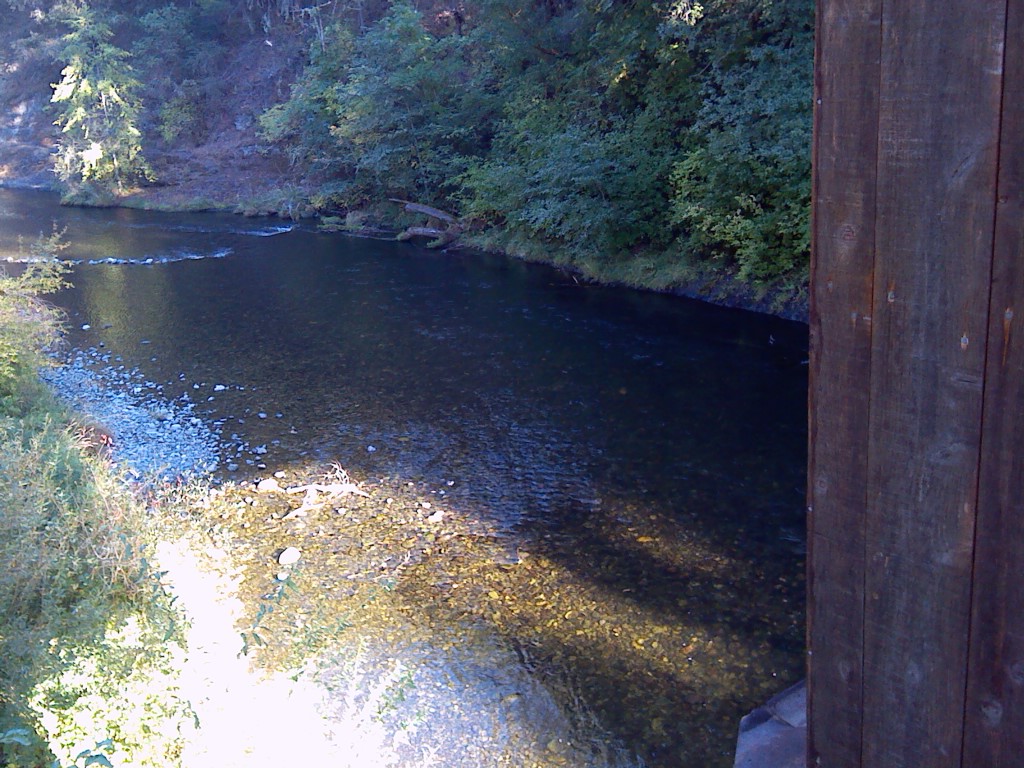
Who else would be better to visit the Bigfoot trap with than my coworkers who got interested in it with me in the first place? Two of my former coworkers from All About Oregon, Megan and Steph, along with Megan’s daughter River, joined me on this day excursion. It was a long, peaceful trip through farmland and forest. After driving quite a few miles along the Applegate Highway, we arrived at the Collings Mountain Trailhead, just across the street from a beautiful view of Applegate Lake. There are actually no signs at all to inform visitors that there even is a Bigfoot trap in the area. The only clue the road signs give is that the Collings Mountain Trailhead sign includes a picture of a foot. Most people would assume that this symbolized a walking trail, but Bigfoot hunters know that this is the way to find Bigfoot.

IMG_20141005_162141_483

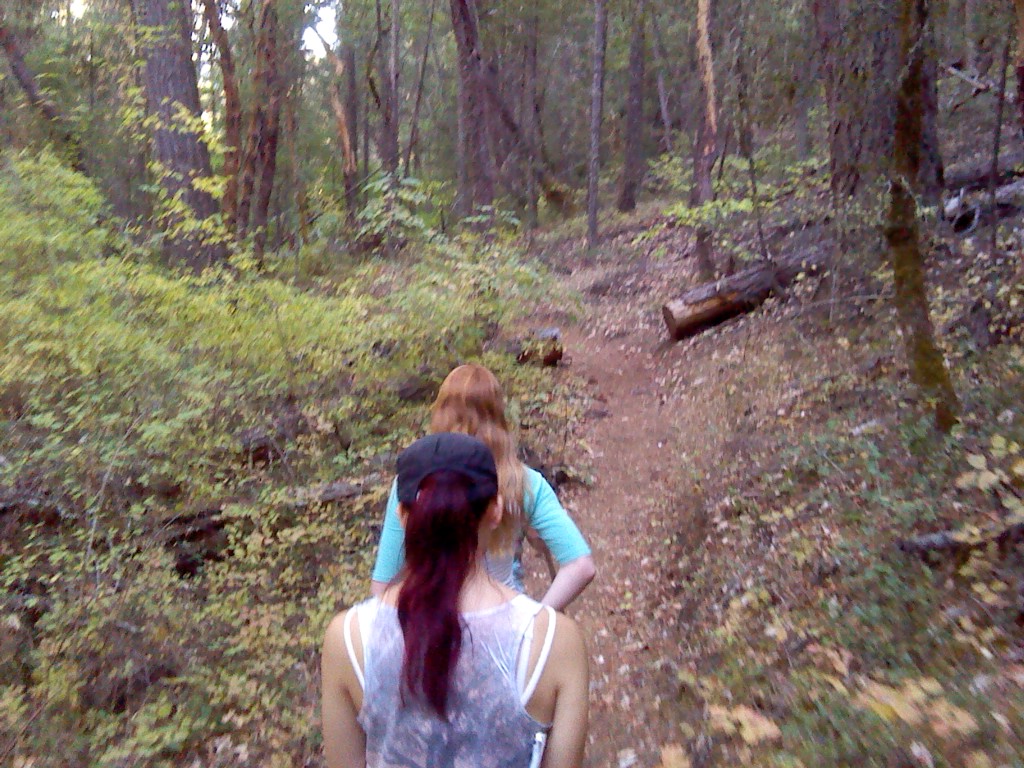
It was supposedly a half-mile hike to get to the part of the trail with the Bigfoot trap, but because this trailhead also had trails that went to the summit of Collings Mountain, as well as trails for biking and horseback riding, the several forks in the road confused us quite a bit. I was glad to have brought a GPS with me, with the coordinates for the trap already plugged in! However, with the mountains and thick forest interfering with the GPS signals, we did up going on the wrong path once, but soon realized that we had walked too far.

Bigfoot Trap Caretaker's Shack

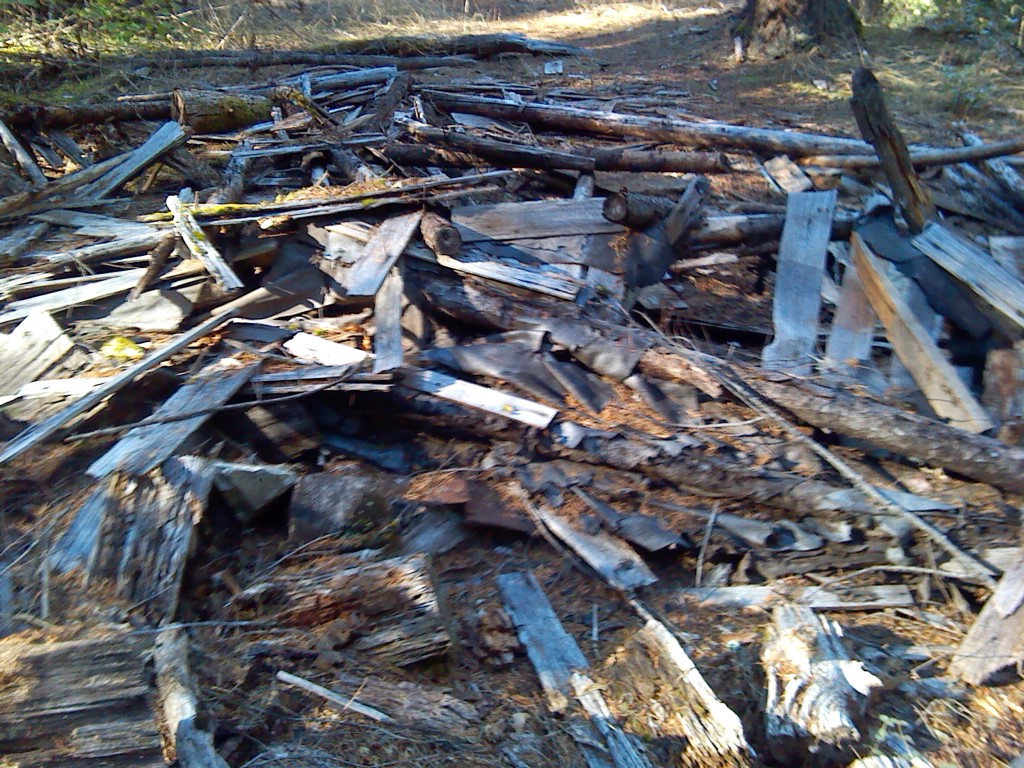
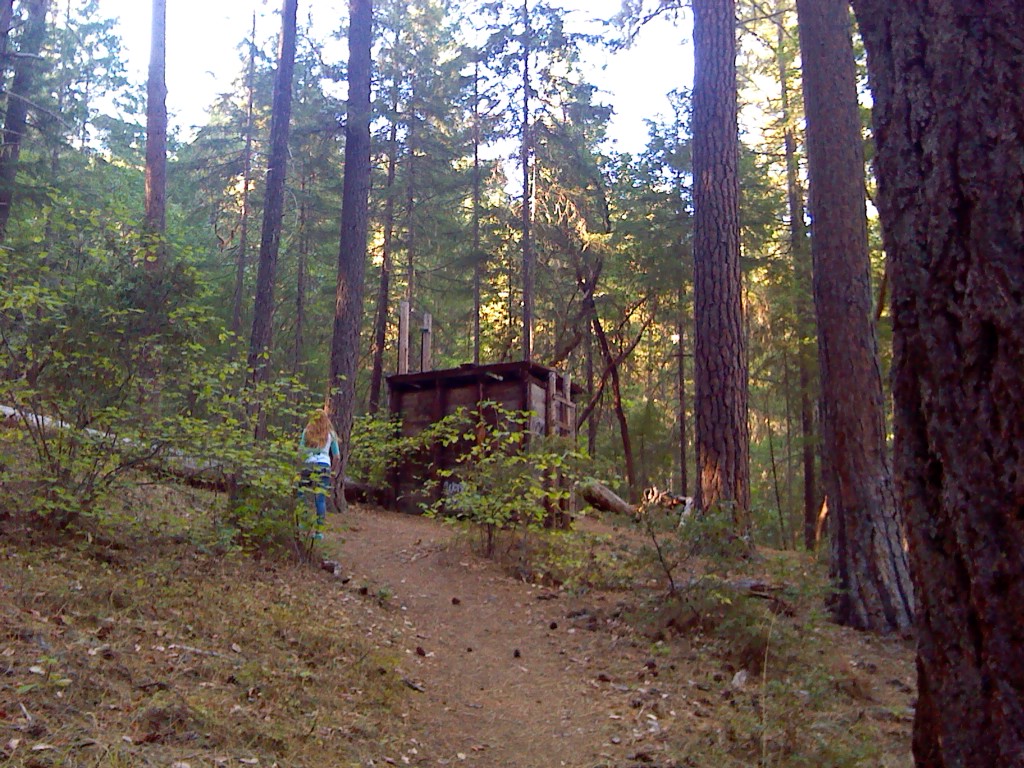
The first man-made feature we found was a completely-destroyed cabin. This was the shack that the trap’s caretaker lived in. All that remains are a few boards on the ground, but through close observation you can somewhat gather what it must have looked like. After walking just a little bit further, we finally saw the Bigfoot trap off in the distance!

IMG_20141005_155206_485

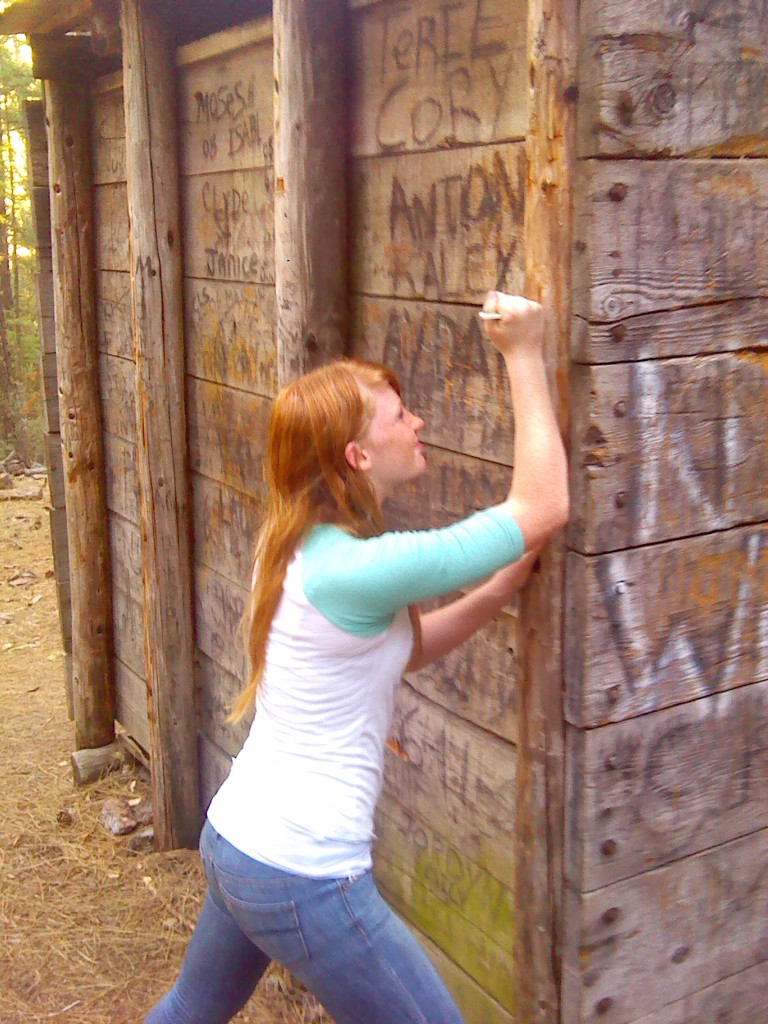
Because it hasn’t been refurbished for years and doesn’t officially belong to anyone, the trap itself has turned to a sort of log book where visitors have vandalized. We enjoying crawling under the door and being “trapped”, and just being amazed at the notion to build a trap in the middle of nowhere to find a creature that may or may not exist!

"Vandalizing" the Bigfoot TrapI was prisoner of the Bigfoot Trap!

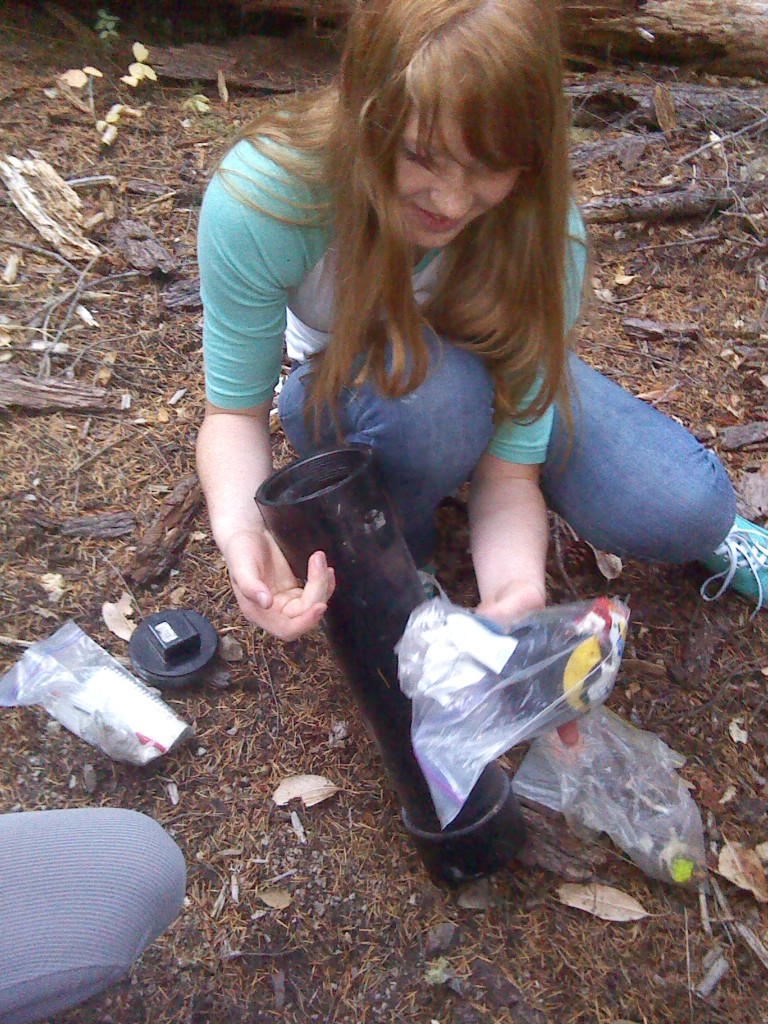
While the Bigfoot trap was the point of our trip, we had a few other things we came to do. I wanted to introduce the other three to one of my hobbies: geocaching. In the near future, I will be dedicating a post all about geocaching, but when I describe it to people who have never heard of it, I say “It’s like a worldwide treasure hunt for grown-ups!” Since finding Bigfoot proved to be too difficult, I figured that maybe we could at least find a few geocaches. I plugged in the GPS coordinates for the cache closest to the trap. Like I had mentioned before, my GPS was acting really jumpy in the area, so this one proved to be a challenge. Based on the cache’s description, we’re pretty sure we found the tree that the cache was hidden near, but we did not find the ammo can that contained the geocache. But not to fear; we had more geocaches to find!

On the Trail of Bigfoot Geocache

As we walked back towards the car, we were also on the lookout for another geocache. The GPS worked better in this area, and although this was still a tricky one to find, we went in the right direction. This was not only River’s first time to geocache, but she was also the first of us to find the geocache container!

On the Trail of Bigfoot Geocache

This was a really nice geocache, except for the fact that some of the items inside got a little damp. We all signed and dated the logbook, and then we each traded a small trinket we bought for an item inside the cache. We then closed up the container, hid it back where we found it, and continued back toward the road. As we were walking, I realized that almost all the hikers who go on trail must have Bigfoot on their mind, regardless of whether they’re Bigfoot believers or Sasquatch skeptics. I joked that if I had a large expendable income, I would get a few life-sized figures of Bigfoot and hide him just far enough away from the trail that people might catch a glimpse. Everyone else agreed that they would do the same thing. I’m surprised no one has done that yet!

There was one more small geocache across the street from the trailhead. Steph found it wedged behind the railing. Once again, we all signed the log and traded items. From here, we enjoyed the view of the lake, and then got back into the car.

IMG_20141005_165532_689

A few miles down the road is the McKee Bridge. It is the longest of the four covered bridges in that county. While it hasn’t been open to cars for a long time, it was unfortunately also closed off to pedestrians a couple years ago for being unsafe. They have since raised the money for repairs, but because the repair work hadn’t begun yet, we could only get up to the opening of the covered bridge.

McKee Bridge

As we walked back to the car, Steph and Megan were discussing that they had a favorite restaurant in historic Jacksonville, which was the closest town. They then turned to me and asked “Jes, do you like sushi?” I don’t like sushi, but I agreed to go to Umi Sushi. I found out that there are actually fish-free options for sushi, so I decided to be adventurous with this new cuisine and order a bento box with avocado rolls. (River was even more adventurous and got eel sushi!)

IMG_20141005_183252_487

Overall, it was a crazy day of unique adventures. Although we didn’t find Bigfoot, we did discover new things not too far from our Southern Oregon home!

IMG_20141005_171322_679

Accommodations, day trip, destinations, moving, saving money, tour, travel tips

Across America By Bus: Chicago

This is part two of the “Across America By Bus” series. Click here to read part one, “Greyhound Perks and Pitfalls”.

I have wanted to visit Chicago since I was eight years old. Granted, I wanted to go to Chicago back then because that’s where the Veggie Tales headquarters were. Veggie Tales moved out-of-state several years ago, and most of the attractions I went to didn’t even exist when I was eight, but finally getting the chance to visit Chicago felt like a childhood dream come true. I made sure to make it the first stop of my trip across America.

The first place I visited in Chicago was, of course, the Chicago Greyhound Station. It was probably the nicest bus station I went through on my entire trip, but it still wasn’t anything too special. The next place I visited was the inside of a taxi cab. I was only staying a mile away, and normally I would walk that distance, but because I had several pieces of luggage, it was worth paying the seven dollars for a cab. Besides, riding a taxi through a big city is part of the experience! I wasn’t allowed to call a cab or ride the subway when I went to NYC in high school, and it always felt like I was missing an aspect of the city because of it. The third place in Chicago I visited was the hostel.

Chicago Hostel

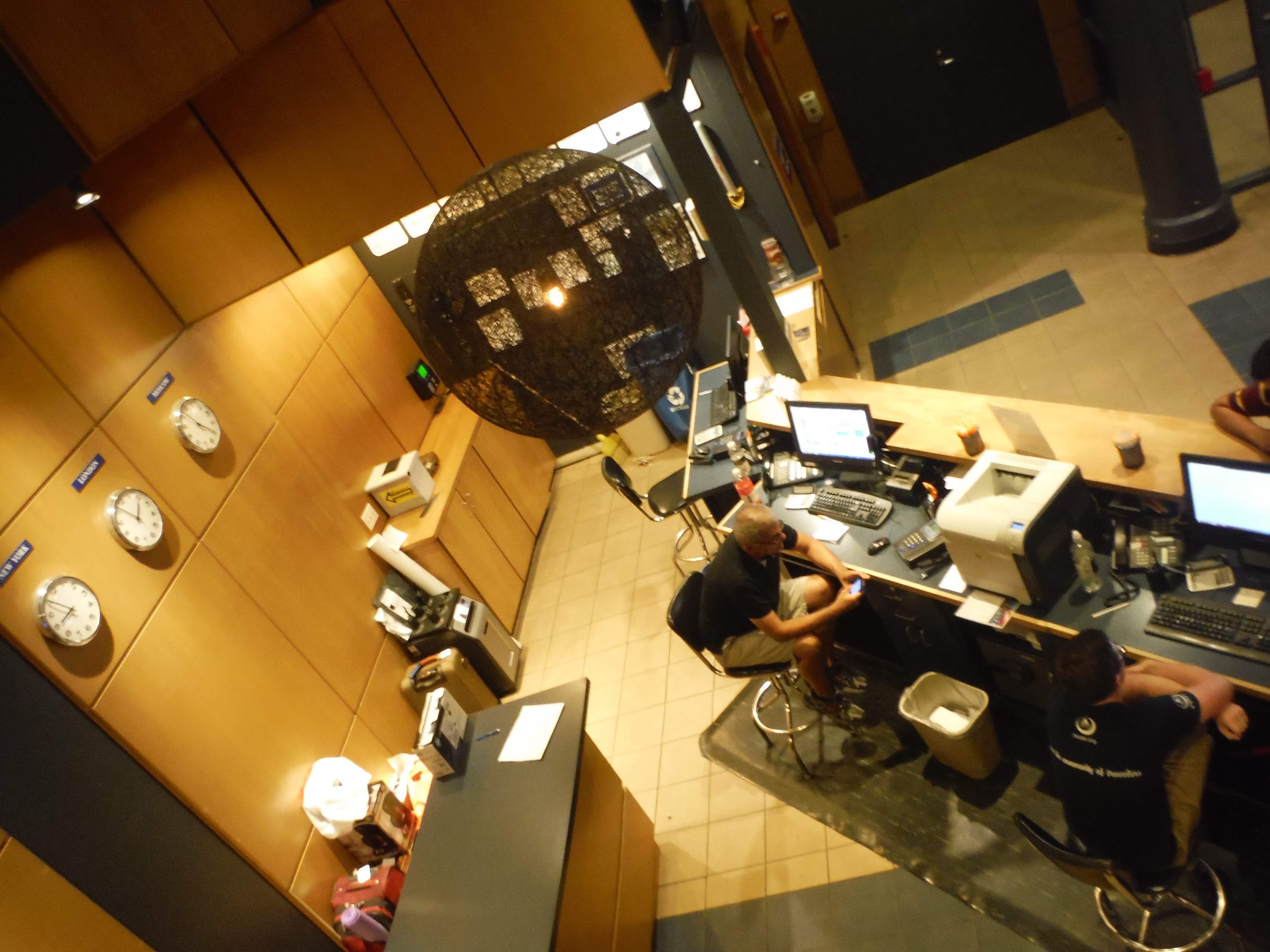
Hostelling International Chicago is conveniently located downtown, within walking distance of everything I wanted to visit. It was the only HI-brand hostel I’ve ever stayed at, and by far the largest! This hostel was quite a bit more expensive than any other hostel I’ve visited, plus I had to pay a few more dollars because I wasn’t a Hostelling International member, but it was still a great deal when you consider that any other accommodation within several miles would be at least three times the price. I checked in and went up to my dorm for a tiny bit of shut-eye before I woke up with the excitement of wanting to seize the day. Since I usually travel slowly, cramming Chicago into just one full day was a challenge, but I think I made the best of it.

As I was heading down to the first floor of the hostel, I noticed a sign that said the hostel sold discount tickets for the Willis Tower Skydeck. That was on my agenda, and I’m always up for saving money, so I picked up a ticket from the front desk before heading out.

Chicago Willis Tower

Just a few blocks away was the Willis Tower, although many people still know it as the Sears Tower. It was the tallest building in America up until this year when the new World Trade Center was built. Unfortunately, when I got to the Skydeck entrance, employees were announcing to the crowd that there was a broken elevator and to come back later. I mentally rearranged my itinerary and headed towards what I thought was Lake Michigan.

Chicago Feet Statue

After walking for many, many blocks, I thought I should have been at the lake, but I wasn’t. I finally pulled out my GPS and discovered that I had been walking parallel to the lake the entire time! I turned and began heading the right way. It actually turned out for the better, because I hadn’t planned to go to the Magic Mile, but because I took this route I ended up at the very end of it. A race was going on that day, so I walked by the finish line and visited several of the vendors before continuing on by Lake Michigan.

Lake Michigan Chicago Harbor

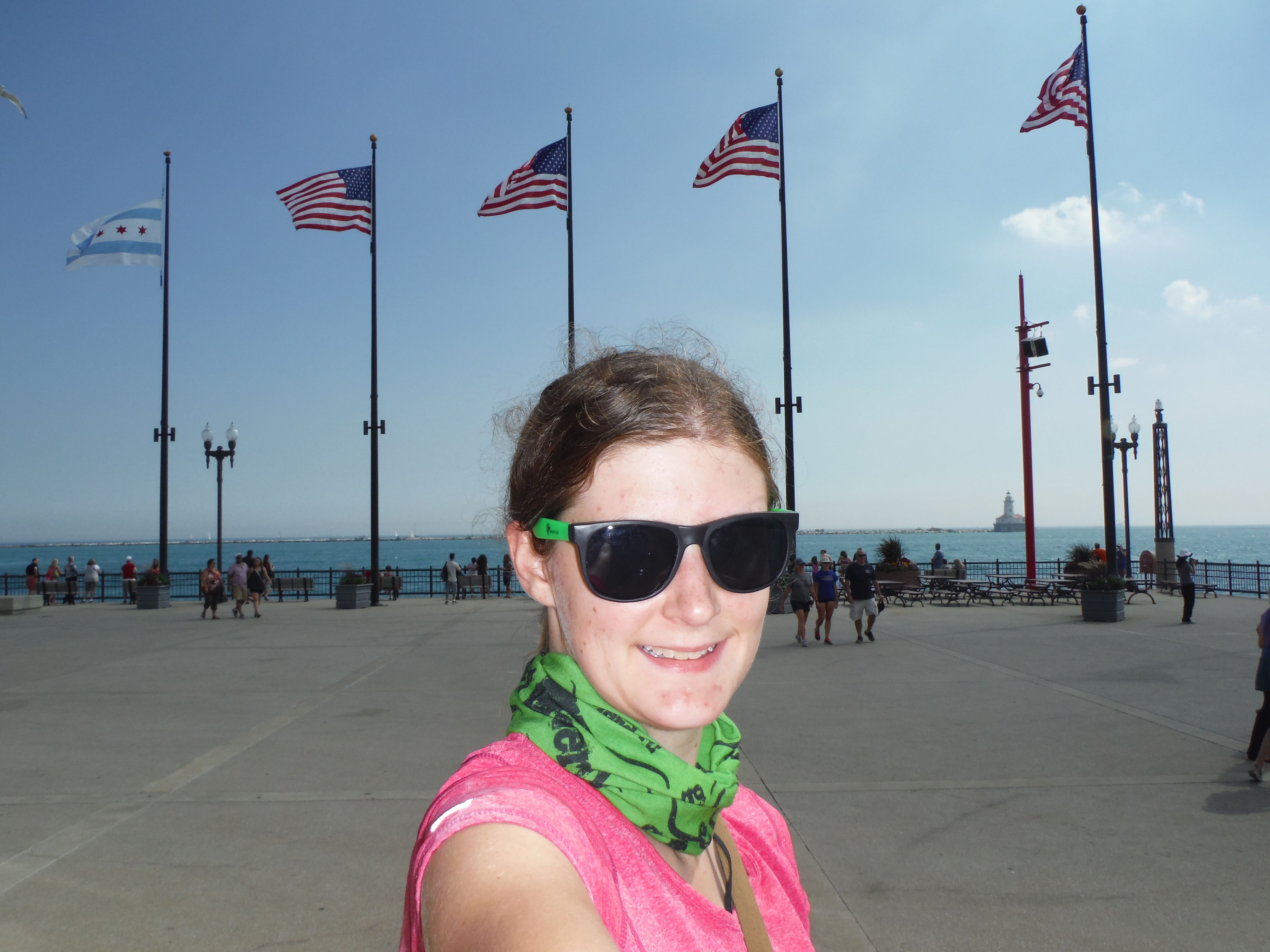
I had flown over Lake Michigan before, but this was my first time seeing it up-close. For awhile, I enjoyed walking on the path by the harbor, with a few stops at interesting points like the Buckingham Fountain. Eventually, I made it to my intended destination: the Navy Pier.

Chicago Buckingham Fountain

Before leaving on this trip, I had asked for travel tips from people who had been to Chicago. The Navy Pier was a common recommendation. I enjoyed walking out above the lake, and going through the shops and art features, but I’m still not really sure why so many people told me to go here. I found a pizza shop on the pier where I ate lunch, and on the way out, I saw a Crave Bar truck where I grabbed my dessert. I then headed on to Millennium Park.

Chicago Navy Pier

Millennium Park is interesting in that is was created to celebrate y2k, but it wasn’t opened until several years later. I first found myself in a beautiful outdoor theater, but I was looking for the famous Cloudgate “Bean”. Something reflective across the theater caught the corner of my eye, and sure enough, it was The Bean! It was fun walking around and underneath The Bean for a fun house effect. My favorite part was trying to find myself in the reflection among the hundreds of other visitors!

Chicago Bean

After getting dizzy from the optical illusions of The Bean, I continued through the park’s art, including the Crown Fountain. I then turned back to downtown towards the tallest building I could find. I was going to see if the Willis Tower Skydeck had opened yet.

Chicago 2014 090

When I got there, the staff was still saying that it was closed. I went up to one employee and asked her if it would be open at any point in time that day.

“Nope, come back tomorrow.”

Knowing I wouldn’t have time since my bus left the next morning, I asked if there was any way I could get a refund. She scrunched her face up. “Refund?” I nodded. “Oh, you have a ticket? If you have a ticket, you can go inside!” I pulled out my ticket and went through the doors.

Because the staff hadn’t communicated very well that only ONE elevator wasn’t working, and that people could still come if they had bought a ticket elsewhere, there wasn’t much of a line at all. The trip started by going down to a basement floor, getting a security check, and then watching a video about the history of the tower. I then crammed with several other people on an elevator that went to the 99th floor. It felt really different on this floor. I don’t know if it was just in my head, but I’m convinced that I could feel the building sway! I then got onto another elevator to the 103rd floor, also known as the Skydeck.  It’s the highest the public can get in any building in the United States.

Chicago View from Skydeck

I enjoyed going around the building and looking through the panoramic windows. I was able to locate almost everywhere I went earlier that day. But the highlight of Chicago was definitely “The Ledge”. These are four glass rooms that stick out of the Skydeck, so you can see everything straight below you! Waiting in line allowed me to get the guts to walk out, but as soon as I stepped out, I felt like I was going to fall! I posed for a few pictures, and then stepped back onto solid, opaque ground! It was such a rush, I decided to go out on all four ledges. It never got any easier!

Chicago Skydeck Ledge

After coming back down to Earth, I walked around the Willis Tower and was amazed at how far up I’d gone. Because I was operating all day on only a few hours of sleep, I went back to the hostel to relax for a bit. I realized that I needed to find a Chicago pizza restaurant to eat dinner at, because the pizza I got at the pier wasn’t very good at all. After I had recovered enough, I asked the front desk for pizza recommendations, and I was sent to Lou Malnati’s. I didn’t realize until I got there, but this the most popular place for Chicago pizza! I had to wait outside for 45 minutes with a buzzer, but trust me, it was worth the wait! I ordered a personal pizza of their best deep dish, “The Lou”. I had always heard that traditional Chicago pizza had sausage, but this was vegetarian and featured a divine combination of spinach, mushrooms, tomatoes and three cheeses.

Chicago Lou Malnati

After finishing off with a cookie pizza dessert, I spent the rest of the evening exploring all that the hostel had to offer. After a somewhat restful night’s sleep, I woke up, enjoyed a full breakfast, got ready, and took a taxi back to the Greyhound Station, where I boarded the bus to my next destination!

004

A big thank-you goes out to Hostelz.com! I found out about the HI-Chicago Hostel through this site, and there you can find thousands more!

moving, road trip, saving money, travel tips

Across America By Bus (Greyhound Perks and Pitfalls)

This is Part One of the Across America By Bus series.

This past July, I backpacked around Niagara Falls. My primary goal of this trip was to have a ton of awesome new experiences. My secondary goal was to keep it minimalist. Both of these goals came into play when I decided how to get to Niagara Falls. Because I was living in Central Ohio, it seemed almost pointless to fly. Besides, the Niagara Falls airport is nowhere near the actual Niagara Falls. Driving was out of the question. I already find driving to be somewhat stressful, and it would be even worse figuring out directions, navigating traffic, and driving my car that was already on the fritz. And although I did enjoy taking a train trip a few years ago, there are no Amtrak stations in Central Ohio. That only left one option:

The Greyhound bus.

I had never ridden in a Greyhound before, but I had heard and read plenty of horror stories. But it would be a new experience for me, and I would save a lot of money. Besides, it wasn’t that long of a trip, so surely I could handle it.

I took three different buses there and back. One from Mansfield, Ohio to Cleveland, one from Cleveland to Buffalo, and from there I took a New York Trailways bus to Niagara Falls. It turned out to be a great experience! Right away I started telling my friends, family, and fellow travelers the perks of riding the Greyhound:

-You save lots of money!

-It’s the most environmentally-friendly way to travel

-You can take a carry-on plus one checked bag for free

-Footrests

-Reclining Seats

-Large panoramic windows are perfect for drive-by photography

-Centrally-located drop-offs and pick-ups

-Personal adjustable air vents

-Free WiFi (woo-hoo!)

-Power Outlets (double woo-hoo!)

-Enough rest stops so you never have to use the mysterious bathroom in the back of the bus

-A sense of community you can’t typically find on an airplane

(Note that these features are based on the new bus models; some older models are still in commission, but they are getting rare.)

As mentioned in previous posts, I moved from Ohio to Oregon a few weeks ago. It was the biggest move I ever made. I had to travel through ten states and four time zones all the way across the country. And guess how I got there?

Yep, the Greyhound bus!

Because I didn’t want to spend days on end inside a bus, I bought four separate bus tickets so that I could stop at a few different cities, see the sights, and visit some friends. I bought a ticket from Columbus to Chicago, from there to Omaha, from there to Denver, and finally, to my home in Oregon. The bus ride combined with several days of mini vacations ended up taking me nearly eight days to make this trip. During this time, I did see the darker side of Greyhound. While I think overall Greyhound is a worthwhile experience, these are some of the pitfalls:

-Regardless of the time of day, stops are made every 2-3 hours, so it’s really hard to sleep

-The seats don’t have enough legroom

-The overhead compartments are usually too small to hold typical carry-ons, which translates to even less legroom

-Small children can have meltdowns on long rides

-Some (not all) bus drivers can be in very bad moods

-The buses run late more often than they’re on time

-You have to transfer your own luggage every time you change buses

-Fellow passengers can be cranky, annoying, or have body odor

-YOU could be cranky, annoying, or have body odor

No, traveling cross-country by bus is not for the faint of heart. However, I think everyone can benefit from taking a bus ride that’s only a few hours long. I was really glad to have the experience of my Ohio-to-Niagara bus ride before embarking across America. Because of it, I was able to come up with some handy tips that probably saved my sanity. If you’re heading on a Greyhound trip anytime soon, here’s some tried-and-true advice you may want to consider:

-Buy your tickets online and several weeks in advance. You’ll save a ton of money that way.

-If you plan to sleep, come prepared. I brought melatonin tablets, lavender lotion, a Snuggie, and a pillow. You may want to bring a neck pillow instead of a full-size one, and earplugs may also be beneficial. I’ve heard some people suggest bringing an eye mask, but I would advise against it. I think you’re much more likely to get robbed if you’re already blindfolded!

-Unless you enjoy eating nothing but fast food and convenience store snacks, bring a few healthy foods along with you. Yes, food and drink are allowed on the bus!

-Bring hand sanitizer and keep it convenient. The 3.1 ounce liquid rule doesn’t apply to buses, so feel free to bring an industrial-sized bottle!

-Don’t expect to look your best. I always kept my hair tied back and covered with a buff, hat, scarf, or some combination of all three. I changed my clothes once per day and brushed my teeth during layovers. Other than that, just make sure you apply deodorant, and don’t even bother with hair styling, make-up, or fashion.

-Pack as light as possible. Because I was moving, I had a lot to carry. It was a hassle.

-You may find some sketchy people on the bus. Sit near the front of the bus where you can easily call for help from the bus driver. I even wore a rescue whistle under my shirt. I never had to blow it, but it could have saved me if I got into a dangerous situation.

-Try to keep track of where you’re going and how much longer you’ll be on the bus. For some legs of the ride, I pulled out my GPS so I could follow the route and know exactly where we were at. When I didn’t use it, I sometimes wouldn’t even know what state we were in!

-Using the WiFi is a great way to pass time, but don’t expect it to always work. (And even when it does work, you cannot use it to stream videos.) Other things I did to pass the time included watching DVDs, writing in my travel journal, napping, and conversing with my fellow passengers.

-Try to talk at least a little bit with your fellow English-speaking passengers. It will make everyone more comfortable.

-If it’s light outside and you have a several-hour layover in any given city, do yourself a favor and get out of the bus station! Because stations are centrally-located, you’ll probably see quite a bit on a short walk.

Even after spending too-many-hours-to-count on the bus, I can’t wait for my next opportunity to ride the Greyhound. I signed up for Greyhound’s Road Rewards, and between my Niagara Falls trip and my Ohio to Oregon trip, I earned enough points to get a free companion pass on my next trip! I’m excited to introduce someone else to the joys of riding the Greyhound. But first, I need to figure out where to go!

Stay tuned for “Across America By Bus, Part Two”, in which I actually tell you what I did at my stops across the country.

moving, road trip, saving money, tour, travel tips

Adventures in Moving

When I was little, I remember how fun I thought it was to move. After all, my family first moved out-of-state before I even turned one, so with all the subsequent moves, I thought it was just a natural thing to do. (Plus, being so young, I didn’t have to do any of the work!) But after I started school, we only moved once more to ensure that my sister and I could grow up in the same school district. But once I finished community college, I of course had to enjoy the adventures of moving once again!

I first moved at the age of twenty from Oregon to Nebraska. This was by far the easiest move. I didn’t have any commitments in Oregon, and I had an internship lined up in Nebraska that included housing. It turned out to be the basement of a camp chapel that didn’t even have kitchen appliances, but at least there were couches, bathrooms, and a squeaky bed to sleep in. At the time, the most obvious choice was for me to take the airplane. I hadn’t explored very many modes of transportation at this point in time. I looked into taking the train, but it only cost a little less and would take three days. (I did end up taking the train back for Christmas, though.) Because most people reading this probably have flown multiple times, I won’t bore you with details. It was a pretty typical flying day to get halfway across the country. I took two suitcases plus carryon items. It was enough to live on for a few months, but every time I went back to my parents’ house for Christmas, I would fill up another large suitcase with left-behind belongings. I ended up living in Nebraska for two years and one week.

I moved from there to Ohio next. I had bought a car around my first anniversary of living in Nebraska, and since I would need a car in Ohio, it was obvious that I would drive the 800 miles to my new home. Problem was, I did not yet have a home. I did have a job, though, and a couple of my coworkers-to-be let me crash at their place for a week. So I packed up my car and began my first-ever road trip. Since it was costing me vacation money to make this move, I wanted to make it as fun as possible. In Iowa, I stopped at an art park in downtown Des Moines and the future birthplace of Captain Kirk in Riverside. I stayed the night in Morris, Illinois, and the next day went to Michael Jackson’s childhood home in Gary, Indiana and to a park in Fort Wayne where Johnny Appleseed was buried. I also made sure to find at least one geocache in every state I drove through until I arrive in Ohio. After spending some time with the coworkers and having problems securing an apartment, I moved into an RV with a roommate for about a month before finally moving into an apartment. Well, it was actually a barn, but it was remodeled into apartments! If you total the time I lived in these three places in Central Ohio, I lived there for for one year and one week.

Most recently, I moved from Ohio back to Oregon. My adventurist self could have taken this negatively. After all, I wasn’t moving to a new place I had never been before like the two previous moves. But I set out to make the best of it. I first considered driving back, since I had accumulated quite a few belongings. But I knew that my car needed a lot of work, and even then it still might not make it all the way across the states, so I sold it. (And although I’m still car-less, I’m glad I can buy another car in Oregon- they don’t have rust here!) I considered having my things shipped, but after gettting estimates from shipping countries, I realized that getting everything shipped would cost more than replacing everything upon arrival. So I set to sell and donate most of my possessions. I ended up with two boxes of books that I would ship Media Mail, a 100-pound suitcase that I would ship Greyhound Package Express, and a suitcase, carry-on, messenger bag, and pillow that I would take with me on my trip. After considering flying and taking the train, I decided to go with the cheapest option that would allow me to see the most of this country: Greyhound bus. 

After having a friend drop me off at the Columbus Greyhound station, I went through Indiana to Chicago for the first time and spent two nights there. Then I went from Illinois, through Iowa, to Nebraska to spend two nights and visit coworkers. An overnight bus trip brought me to Denver, where I met up with my cousin for 24 hours of fun. From there, I took a two-night journey through Colorado, Wyoming, Utah, and Idaho to bring me back to Oregon, which included a several-hour layover in Portland where I went on a whirlwind self-guided tour. One thing about Greyhound is that there are rest stops and meal breaks along the way, so I really got to see a lot more of the country than I bargained for. This was a big plus, except when it was the middle of the night and I would have to wake up! Since I usually only travel with a backpack and maybe a small rolling carry-on, I did find it a huge hassle to schlep my own luggage at every transfer, but overall I think I had a much better experience moving like this than I would have any other way. If you’re still unsure that Greyhound is a good option, be on the lookout for a future post where I go over all the perks (and pitfalls) of riding the bus!

I’m not sure how long I’ll be in Oregon. I wouldn’t be surprised if I spend less than a year here. I know full well that moving can be stressful, but it can also be an adventure. The next time you move, see if you can find any interesting stops on the way there!