destinations, resources, saving money, travel tips

How to Save Big Money in Rome

While planning a European trip to a different destination, I was recently contacted by a fellow magazine editor asking about money-saving tips for her upcoming trip to Rome. I realized I hadn’t shared much about my time in Rome. Although it was over three years ago, I spent nearly three weeks there and have a lot to say about it! So instead of just telling her how to save on her trip, I thought I’d share my tips with everyone!

See the Free Sights

You don’t have to pay admission to see beautiful and historic masterpieces. Rome has many piazzas, each worth exploring. Even for attractions you have to pay for (such as the Colosseum and Castel Sant’Angelo), you can still get pretty good views from the exterior. Here are a few of my favorite free sights:

Trevi Fountain Restoration, Rome, Italy
The Trevi Fountain was undergoing restoration while I was there, so they set up a little pool so we could still make our wishes and throw coins.

Trevi Fountain: Technically this isn’t entirely free since you’re supposed to throw two coins in. (I tossed in two one-cent coins to make it as cheap as possible!) But this is definitely one of the must-see Italian statues.

scala sancta rome italy
People praying their way up the Scala Sancta

Scala Sancta: This “Holy Staircase” was imported from Jerusalem and believed to belong to Pontius Pilate. Jesus Christ would have walked these steps several times on the day of his crucifixion. Tradition is to pray as you climb these steps on your knees, and anyone is invited to participate.

Spanish Steps, Rome, Italy
Just a few steps of the entire staircase… it’s huge!

Spanish Steps: No matter how exhausted I was, it was always worth climbing the massive Spanish steps. This is also a good place to sit, eat a snack, and people watch. Being a popular tourist area, you can hear many languages spoken and get a glimpse of all the stunts put on for tourists (“floating” people, rose selling, etc.)
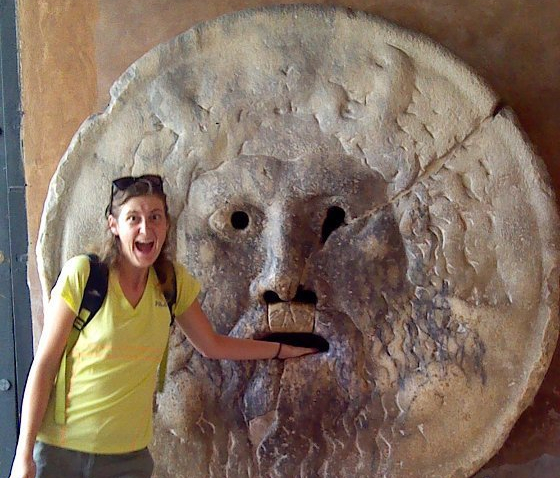
Bocca Della Verita
Close call with the Bocca Della Verita

Bocca Della Verita: The “Mouth of Truth” is an ancient piece of art that supposedly bites off the hands of liars. When I stuck my hand in, I said: “you will bite my hand now”. I think it was too confused to know what to do.
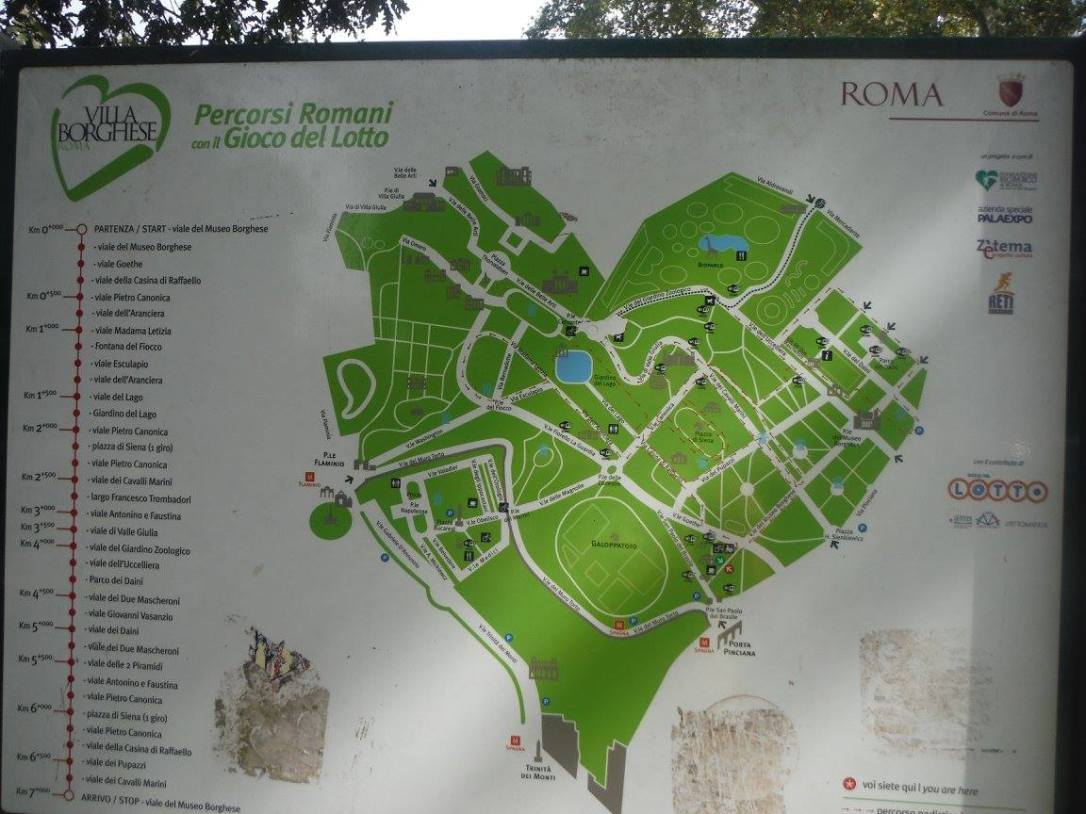
Villa Borghese Map, Roma Italia
So much to do… and I love that the park is heart-shaped!

Villa Borghese: This giant park definitely has some fun things you can pay for. I ended up renting a Segway here. But it’s also a good place to have a picnic, overlook the city, and go up to the zoo entrance. (The zoo has an admission fee, but they have a few free displays before the ticketed area.)

Stay in a Hostel

You can get a downtown hostel for around 20 euro, depending on location and time of year. I ended up staying in three hostels during my time in Rome. I wasn’t thrilled with the first one. I loved the second one but it was small and only had a few days of availability. I finally settled into the third one. Since hostels can be so diverse, make sure to carefully read the reviews on a website like Hostelz.com. (Fun fact: I wrote the description for Italy and many of the Italian destinations on that website!)

Try to get a reasonably-priced hostel that includes breakfast to save even more money. Breakfast can include a lot of things, such as breads, spreads, juice, and croissants, but my favorite hostel breakfast treat was cookies. Yes, they have cookies for breakfast! While you’ll want to eat out at least a few times in Rome, it’s also an experience in itself to visit a grocery store like the locals. See what kinds of things the other shoppers buy, and then head to your hostel’s kitchen to try your hand at an authentic Italian meal!

Walk

Walking by Tiber River, Rome, Italy
Carrying a backpack meant I could spend the whole day out and about, like walking along the Tiber River

Rome has a subway system, but not one worth getting excited over. Due to the buried historical artifacts under Rome’s surface, it would require too much expensive excavation to build a subway that takes you everywhere you want to go. I only rode Rome’s subway once (and only because someone handed me a free ticket), and it was overly crowded. Street traffic and taxi prices are even worse.

What’s a better solution? Walking! Most Rome sights are all within a few miles of each other. As you walk from one place to another, you’ll likely find dozens of other interesting stopping points along the way. Some ancient artifacts and ornate architecture are just casually located throughout the city.

Go to Church

Pope Francis in the Vatican
The closest I got to meeting Pope Francis

When in Rome, it doesn’t matter if you normally go to church. Going to church here is a must-do. Of course, you’ll have to visit the Vatican, the world’s smallest country and headquarters of Catholicism that just so happens to be encased inside Rome. When the Pope is in town, he speaks on Wednesdays and Sundays. Go to both if you can, as they are different experiences. When the Pope’s not speaking, go inside St. Peter’s Basilica. You could spend hours there! Vatican City also offers admission-based activities such as climbing to the top of the Basilica (take the stairs to save on the elevator fare) and the Vatican Museums (plan an entire day here and don’t just visit the Sistine Chapel!)

Outside of the Vatican, there are still plenty of other churches that are worth stepping into. They’re all open most of the day to visitors, and can be a welcome cooling-off point during warm months. I made a point to stop inside every church I passed, and I was never disappointed.

Although most churches in Rome are Catholic with services held in Italian, I did end up attending a Sunday morning Protestant service held in English. In fact, it turned out that the pastor was from Oregon like me! Rome Baptist Fellowship is a centrally-located international gathering of travelers, expatriates, and even locals gathering together, which was a fun experience.

Stop at the Palatino

Palatino, Rome, Italy
I spent at least as much time at the Palatino as I did at the Colosseum- so much to walk right up to!

This is more of a time-saver than a money-saver, but you want to make your time in Rome count! Don’t wait in a long line to buy a ticket at the Colesseum. Instead, head over to the Palatino, an attraction in its own right lurking in the shadows of the more famous attraction. Buy a ticket and enjoy the sights there, and then head over to the Colesseum and skip the line there. Tickets are good for both attractions, but for some strange reason, many people skip the Palatino.

Tour with Rick Steves
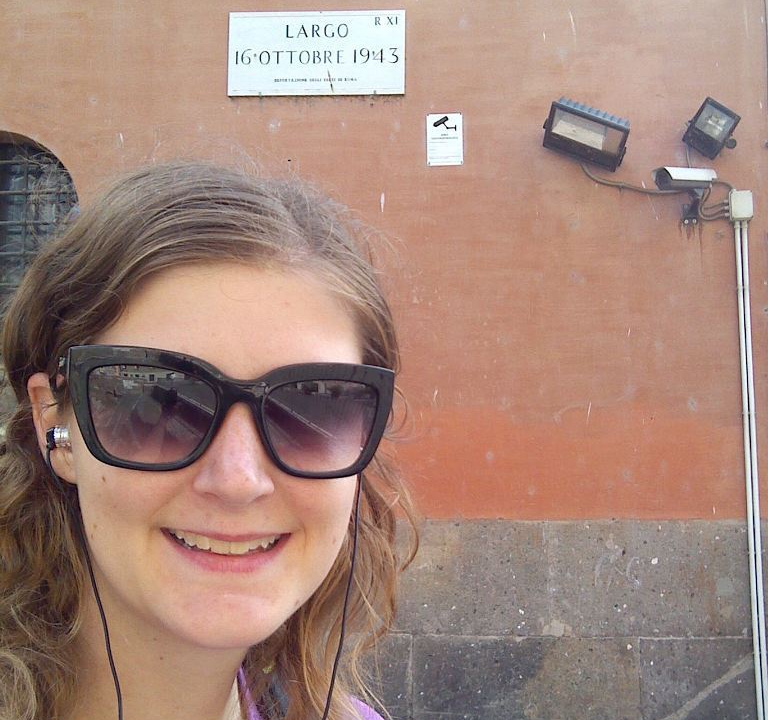
Rick Steves Audio Tour, Jewish Ghetto, Rome, Italy
With Rick Steves coming through my ear buds, even this street sign in Rome’s Jewish Ghetto had an interesting history behind it!

If you like guided group tours, Rick Steves probably has the best ones out there. I prefer to travel solo, but Rick Steves still played a major role in much of my European travel. If you download the free app, you can access tons of audio tours and more advice for your travels. In Rome, I took audio tours through places like the Jewish Ghetto, the Colesseum, Heart of Rome, and Trastevere, just to name a few. I discovered a lot of interesting things I would never have noticed on my own.

At night, I would often fall asleep in my hostel dorm with my earbuds in, listening to Rick Steves tell a story about one of his European adventures or interviewing another travel expert. It made me excited to wake up the next morning and explore Rome more!

Eat the Lunch Specials

Italian Pasta in Trastavere, Rome
Course 2…

I was told by multiple people to go to the Trastevere area for lunch. Or, if you like eating dinner at an American time (like 5) instead of an Italian hour (like 9), lunch specials can still apply. At most of the restaurants in this part of town, you pay a fixed price and then get to choose what food you want for each of the three courses off a special menu.

Trastevere is an interesting part of town not for its famous attractions, but because you can get a taste of what life in Rome is really like. Burn off your lunch calories with a walk around these cobblestone streets. Since it’s located on the Tiber River, walk along there too. There are sometimes special events along the river, such as a Nutella street fair that I happened to find there! That resulted in a free Nutella snack that I saved for another meal!

To save money at nearly any meal, drink water! And not the bottled kind. Rome has safe drinking fountains throughout the city where you can fill up for free.

Eat Gelato

Fassi Gelato, Rome, Italy
Move over, Baskin Robbins with your 31 flavors… there were so many unique flavors at Fassi!

You can’t go to Italy without indulging in gelato. It was a great snack, dessert, or sometimes even a meal-on-the-go! My favorite gelateria was called Fassi. It’s a little ways away from most tourist attractions, so the price is lower and you know you’re getting the real deal. A hostel roommate introduced me to this place, and in return, I introduced several more roommates. Now I’d like to introduce everyone to Fassi!

Another Italian treat you must try in Rome is tiramisu. For both gelato and tiramisu, I’d recommend seeking out a dessert at least once a day and trying a new flavor each time!

save big money in rome

Thinking back to my time in Rome is making me realize that despite spending a few weeks there, I left so much of it unexplored! Do you have any money-saving suggestions that I missed? Help my friend out by leaving them in the comments!

Couponing to Travel, destinations, film, resources, saving money, travel tips

Couponing for Mary Poppins Returns (and a Visit to Her Hometown!)

London skyline and pigeons
Despite the song from the original movie, please don’t feed the birds. I heard a Parisian tour guide describe the overpopulation of human-dependent pigeons as “winged rats”.

I may be a little late to the game, but yesterday I finally got to see Mary Poppins Returns.

With all the adventures Mary Poppins has with the kids, it got me thinking about my own travels. Especially about London.

But wait, I haven’t been to London yet!

However, England is on the itinerary for my next international trip. (The other potential destination on this trek includes Germany.) Consider this my official announcement! Now that the word is out, here are the two questions I know I’m going to be asked:

  1. When are you going?
  2. How can you afford it?

The answer to number one isn’t set yet, as it mostly depends on the answer to number two. And that brings me to the point of this post…

But First Let’s Return to Mary Poppins Returns

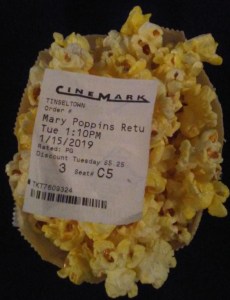
Movie Ticket and Popcorn
The ticket says it was $5.25, but it wasn’t really.

Although I saw the movie during my theater’s “Discount Tuesday”, I still didn’t want to pay that price. I noticed that Fandango had an offer for this particular movie. If I bought $8 worth of Ivory soap, I could get up to an $8 discount to see Mary Poppins Returns. Although I didn’t really need the soap, I decided to buy it anyway and try to find something useful to do with it. (I ended up selling it all for the same price I bought it.) I uploaded my receipt to Fandango, and they gave me a promo code. Even with Fandango’s reservation fee, the total of the ticket was still just under $8, so I got to see the movie for free.

But wait! That’s not all! Last month, there was a similar Fandango promotion with Chex cereal. For buying three boxes of cereal, I could either see The Grinch or get a $5 concession credit. There was no minimum spend for this deal, so I found some valuable coupons that made each box of Chex just over a dollar each. Since I’d already seen The Grinch with another free ticket promotion (disclosure: I’ve found discounts or free tickets for the last several movies I’ve been to), I decided to get the concession credit, which I finally used yesterday. I was disappointed to find out that there was a small price increase in concessions since I last went to Tinseltown, but I decided to still buy the junior popcorn. The posted price was $5.40, but I used my $5 off coupon.

I didn’t even pay for gas. I live just over a mile away from the closest movie theater. By choosing an afternoon movie time, I was able to safely walk there and back during daylight hours.

My grand total for this complete movie theater experience? Forty cents!

And since Mary Poppins Returns is a Disney movie, I’ll be uploading a picture of my ticket to Disney Movie Rewards. There I’ll get a small rebate that I can use toward a variety of Disney merchandise, tickets, and more. I also scanned my Cinemark Connections so I earned points for future movie-related discounts. And the forty cents was paid with my rewards credit card for cash back. Once these three rebates are used, I will have made money from this excursion!

So What Will I Do With the Savings?

As I just demonstrated, seeing a movie like Mary Poppins Returns in theaters doesn’t have to be expensive. Going to the real London doesn’t have to be either, although I guarantee that it will cost much more than even a full-price movie ticket! Starting at the beginning of 2019, every discount I score will be logged onto an Excel spreadsheet titled “2019 Couponing to Europe”. Although I’ve couponed before, I’ve never couponed with the goal to save for a trip!

screenshot (5)

I have seven different categories for coupons and deals:

Swagbucks: This is my main online way to save and earn. Since doing things like taking surveys and watching videos takes time kind of like work does, I’m only counting rebates and discounts on this spreadsheet to make things simpler. Check out the “Shopping” and “Discover” sections of the website to find good deals- so will even give you a bigger rebate than what you initially spent!

GiftCardGranny: This is my other go-to online savings place. It’s a search engine specifically for finding discount gift cards. Over the past year, I’ve already saved lots of money by buying gift cards to places I normally shop anyway. Although I still have several of those gift cards waiting to be used up, I look forward to refreshing my gift card stockpile this year. By having an account, I also earn “Granny Points” that I’ll eventually redeem for free gift cards!

Other Online: This covers any online deals I found that aren’t through Swagbucks or GiftCardGranny. The one item I have in this category so far is an Amazon gift card I received through a nonprofit I helped to sponsor.

Fred Meyer: This is where I typically shop in town. (For U.S. residents outside of the Northwest, this store is called Kroger in your region.) Most weeks they offer a “Freebie Friday” deal, where anyone with a free shoppers card can download a coupon for a completely free item. Fred Meyer also accepts manufacturer’s coupons, which I’ve already taken advantage of. In addition, I use their gas station because I’ve found ways to get discounts on Kroger gas, too.

Other In-Store: This is the category my movie deals went into. It’s basically the catch-all for any coupons or discounts not mentioned above unless it’s related to my trip or my bank.

Travel-Specific: Over three years ago when I went to Europe on my Mediterranean Trek, I got two free nights in a Venice hotel since I’d made so many other bookings on HostelsClub. I still have some credit on that site, which I plan to use. While researching for my trip, if I find any discounts or free hours for attractions I was planning to visit, that goes in this column. Any freebies or specials for food, lodging, airfare, and transit will go here too.

Banking: I used to use a credit card that gave me 1% back on all my purchases. I recently got a new credit card where I get 1.5% back, plus a $200 bonus for spending $1000 in the first three months. I’ve transferred all my expenses to this credit card except for my rent, which I pay in cash. All of my credit rewards will be saved for travel, plus all of the interest I earn from my savings account. I also recently opened up a new account at a credit union that is separate from my bank where I’ll be depositing the sum of all my travel savings each month. (It currently has a little more than what I’ve saved so far since I wanted to start earning dividends as soon as possible!)

What Are the Caveats?

The problem with couponing and other discounts is that you can get caught up in such a good deal it is, you forget that it’s not even something you would normally buy. I am trying to be very conscious with only couponing if it falls into one of these three categories:

  1. It’s a discount on something I would normally buy anyway
  2. It’s something I would like for free
  3. It’s a deal that will end up making me money (this is the best kind!)

I’ve also already run into some situations where I wasn’t sure if something actually counted as a discount. For example, I made two returns to stores this year. I wasn’t sure if I should put them on my spreadsheet since that would open the door to “hacking” by just buying and returning purchases. But both of these purchases were things that I thought I truly needed at the time but the course of events changed that. I am trying to buy only what I absolutely need for the time being, so this shouldn’t be much of an issue in the future. However, I plan to start selling some of my old belongings soon, and I can’t decide if that is something that should count on my couponing spreadsheet.

Am I Saving in Other Ways?

Of course! My couponing goal is $2000, which I’m hoping covers the overseas plane ticket and most of my time in London. In Germany, I plan to spend one week volunteering, so I won’t have any expenses during that time. For other Germany expenses, possible England side-trips, and pre-trip costs (I need a new passport, etc.), here are some things I’m doing:

  • I’m currently doing an eat-out-of-the-pantry challenge to see how long I can make meals using only food I already have (or things I get for free with couponing). Since I also get free meals at work, I imagine that my pantry will last me awhile.
  • I’m taking on extra work when it’s offered for hourly or per-project pay. I currently work several jobs, which is great because I typically don’t spend money while I’m working. So more work means more pay AND less spending!
  • My spending’s on a diet. For the final three weeks of January, I’m not spending any money unless it’s my regular charity donations or I get a rebate that’s greater than my purchase price. After that, I know I’ll be more conscious about my spending and saving habits.
  • I’m finding other ways to earn through Swagbucks.
  • I’m walking a lot more, whether to run errands or just for recreation. This is partially to save money on vehicle expenses, and partially to get my “backpacker body” back!
  • $2000 isn’t the cap for couponing. If I find ways to save even more before I leave, that means even more money for fun!

With just a spoonful of sugar, saving for England and beyond can be a fun challenge!

Couponing to London.jpg

Note: This post utilizes affiliate links.

Accommodations, camp, holiday, resources, road trip, saving money, seasonal, travel tips, Winter

How I Paid Next-to-Nothing for a Hotel Room

I rarely ever stay at hotels. There are so many other accommodation options that typically provide a better value in terms of service, activities, and price. But I recently decided to book a short end-of-year weekend trip to the Oregon Coast. I usually camp when I’m on the coast, but since I don’t have a heated RV, that isn’t a practical option in the winter. I did check out the state parks to see if they had any heated yurts available. I only found one campground that had one yurt available for one night. I reserved that for a grand total of $51, but that still left me with another night of no accommodation. That’s when I turned to look at hotels.

I ended up finding a hotel room in an ideal location that included breakfast and a few other amenities I would enjoy. Although the room was listed for $70, I used some creative techniques to get the price even lower than the cost of my night in the yurt. And then I did a little bit more to get it for practically FREE!

I will be doing the same process to save money on hotels in the future, and you can too! You can use either tip separately, or combine both for maximum savings!

2 Simple Tricks

This post utilizes affiliate links

Tip 1: Hotels.com Hacks

I decided to book on Hotels.com so I could easily compare the prices of different hotels. It turned out that Hotels.com offers even more savings than just price comparisons! I found a hotel that normally started at $70 but was discounted to $65.

That was okay, but I wanted it for less, especially after taxes and fees were added to that price. I found a Hotels.com promo code that saved me 10%. With that included, my grand total was down to $63.06. Not bad, although I wanted to do better. I booked it anyway.

After paying, I read up on Hotels.com’s price guarantee. Basically, it said if I could find the same type of room at the same hotel for the same dates for a lower price anywhere online, they would match that.

It only took me one Google search to find several booking sites that offered rooms at this hotel for $51. But upon closer inspection, these were for rooms with a queen bed. I had booked a king bed, since on Hotels.com they were both the same price. But on these sites, the king room was still at $65. No savings there.

Then I decided to visit the website for the hotel itself. Oftentimes, booking directly will be a little cheaper since the hotel doesn’t have to pay commission fees. Sure enough, I found a room with a king bed for $51 on their website. I took a screenshot and filled out a quick form on Hotels.com. Pretty soon, I received a refund of $14.58.

That meant I got what might have been a $70 room (not including taxes and fees) for a grand total of $48.48 (including taxes and fees). All I had to do was use a promo code and a price match. I’ve stayed in some hostel dorms for more than that! It was even $2.52 less than my campground yurt!

(Note: Hotels.com has a rewards program where if you buy 10 nights, you get one night free. However, my promo code excluded me from collecting rewards points. But since getting 10% off a night now is better than possibly getting a free night sometime in the future after 10 other nights, I didn’t mind. If you’re trying to decide whether to use a promo code or the rewards program, check out tip #2 for one more thing that may help you decide!)

If that sounds like a good deal to you, feel free to stop reading here. If you’d like to save even more, check out the next tip!

Tip 2: Swagbucks Savings

Swagbucks is essentially savings central. You can earn points called SB by doing things like searching the web, online shopping, and taking surveys. I’ve even earned quite a bit here by donating to charity! After earning SB, you can trade them in for real cash. You can cash out to PayPal or a Visa card, or buy one of hundreds of gift cards. These gift cards can even buy your way to free travel. 

If you don’t have a Swagbucks account yet, click here to sign up with a 300 SB bonus!

Join Swagbucks!

I earned enough just from my regular Christmas shopping to get a Hotels.com gift card. Adding the Swagbucks app to my browser has notified me of lots of cashback opportunities I didn’t even know existed. If you don’t want to spend any money at all, you can still earn with Swagbucks. I’ve earned gift cards by taking surveys, using the Swagbucks search engine, and checking out free offers- no purchases are needed to get a gift card!

Hotels.com is one of the online stores where you can earn cash back on Swagbucks. Although the offer varies from time to time, you will always earn more SB if you book a hotel room without earning Hotels.com Rewards. So if you book a room on Hotels.com with a gift card that you earned on Swagbucks, and you get SB for your stay, you’re basically getting paid to stay in your hotel room!

Since I used a promo code I was not eligible to earn SB on this particular trip, but I ended up saving more with the promo code than what I would have earned in SB. However, when I make a reservation in the future, I will check to see if Swagbucks has a better current payout than the available promo codes!

(Note: On this road trip, I’ll also be paying for gas with gift cards earned through Swagbucks. Check out this post for more details.)

Now I have a great trip at a great price to end 2018. One of my 2019 goals is to pay for a trip with creative couponing (such as using Cardpool as well as Swagbucks and tricks like these for Hotels.com) so you can expect to hear more great ways to save in the new year!

road trip, saving money, travel tips

How I Get Discounted (Or FREE!) Gas Every Time

How would you like to pay less than the posted gas prices every single time you visit the pump? Better yet, how would you like to get some road trip snacks and even the gas for FREE? Yes it’s possible. I would know; I haven’t paid the price that the gas station sign has indicated for a long time! Whether you want to make a road trip less expensive or want to save up for your next goal during your day-to-day commute, here’s how to do it:

Subaru Forester

Note: I typically use Kroger-brand gas stations (known regionally as Fred Meyer, Turkey Hill, etc.) because it turns out to be the cheapest for me locally. If your Kroger gas is for some reason expensive or you don’t live near one of their pumps, don’t worry. You can still apply most of these tips to get a good deal on gas near you!

Look Up Prices

Go to GasBuddy.com or open the GasBuddy app before you decide where you’re going to fill up. This service lists up-to-date gas prices at stations near you. When I’m at home, the cheapest place is typically either Fred Meyer or Costco, which are the only two gas stations I ever use! If you’re on a road trip, it’s helpful to know where you should fill up.

Now that you know where the cheapest pumps are, let’s knock some more money off that gas price…

Become a Member

Go to the customer service desk of Fred Meyer, King Soopers, Ralph’s, Baker’s, or any other store under the Kroger umbrella and ask to get a shopper rewards card. This is free to get and automatically gets you three cents off per gallon at most Kroger-owned gas stations. You can also sign up for a credit card that has a few more perks, but I think that the rewards card is a safer way to go, and if you follow the tips below, could ultimately give you more savings.

The rewards card isn’t just for three cents off. Every grocery store purchase earns you fuel rewards points. If you spend enough at the grocery store (and earn at least 100 points), you can get anywhere between ten cents and a dollar off at the pump! You can also download store coupons right onto this card.

I’m not as familiar with rewards policies for other gas stations, but it’s worth checking out as you can get some great deals. Sometimes, my Costco gas station is cheaper than my Fred Meyer gas station even after the three-cent discount. Since you have to show your membership card to get Costco fuel, that certainly has been worth it!

Use Your Receipt

Almost every Friday, Kroger-owned stores have a “Freebie Friday” coupon that you can download from the digital coupon section of their website. Even if you normally use a different grocery store, make sure to put this on your card and take advantage of the free item (you have three weeks to pick the item up from the store before the coupon expires). You don’t have to buy anything else to get this deal. Just scan the free item, scan your rewards card, and grab your receipt.

Make sure to take a good look at that grocery receipt because it can lead to even more gas savings. My receipt often says that if I go online and fill out a survey about my shopping experience, I will get 50 fuel rewards points. So after just two receipt surveys, I’m getting 10 cents off per gallon, and I didn’t have to pay a cent to do it! You can earn fuel points up to once a week, so get your weekly freebie and fill out its receipt survey to enjoy 20 cents off per gallon.

After following the above steps, you’ll really start to see some savings in your gas budget. For a while, these steps were all I did. But we’re just getting started!

Buy Gift Cards

I recently got involved with buying discounted gift cards online. My favorite website to go for this is Gift Card Granny. It’s basically a search engine for gift cards that shows you where you can get the biggest discount. I can usually get a 2-4% discount on grocery and gas cards. (For more frivolous stores, such as movie theaters and restaurants, the discount is usually more like 10-20% off!)

I normally buy my gas at Fred Meyer stations, but since Fred Meyer is owned by Kroger, I look up other Kroger-owned stores on GiftCardGranny to see what currently has the biggest discount. If you’re using another gas station, find out what other gift cards may also work there. (For example, if you buy gas at Safeway, also look up gift cards for Vons.) Once you receive your gift card, just make sure to use both your gift card and rewards card at every gas station visit.

Special! If you’ve never used Cardpool before, then use this link to get a bonus $5 off your first purchase!

Just in case you’re wondering, most discount gift cards sites verify the cards they sell and have a guarantee for all your purchases. I’ve never had a problem buying discount gift cards.

Once you add this tip to your routine, you should save several bucks on each fill-up. Are you ready to do one more thing to get FREE gas?

Use Your Computer or Smartphone To Make It FREE

If you read money-saving blogs, you’ve probably heard this before. But ever since I started to seriously use Swagbucks, my gasoline budget has become non-existent!

After signing up for Swagbucks, install a couple things onto your browser’s task bar. First, make Swagbucks your primary search engine. You’ll get paid for every few web searches. Also make sure to install the Swagbutton. If your shopping online, the Swagbutton will notify you about any coupon codes or rebates that your purchase qualifies for. These are the best ways to easily earn Swagbucks that won’t affect your daily routine, but if you’re interested, you can also fill out surveys, watch videos, play games, and more to earn Swagbucks!

Get a 300SB bonus when you sign up for Swagbucks here!

You can exchange your Swagbucks for a variety of gift cards. Swagbucks has gift cards to some gas stations, like Safeway, Sunoco, and Chevron. That’s an easy way to get free gas. However, I usually redeem my SB for a $25 or $50 prepaid Visa card. I then go back to GiftCardGranny and pay for my discount gift card with my free prepaid Visa card. You can also do the same thing by cashing out your SB into PayPal, but prepaid Visa cards usually give you more bang for your Swagbucks.

Other Ways to Save Even More On Gas

  • When shopping for a new car, look for one that has better gas mileage than your old vehicle.
  • Coast whenever you go downhill, need to slow down, or approach a stop sign. Basically, the less your foot is on the gas pedal, the better.
  • Can you limit your drives to work by doing something like working double shifts or working partly from home? Last December I changed my commute from 10 miles to one mile by moving closer!
  • Walk or bike when you can. As a bonus, you’ll exercise, get fresh air, and better enjoy the beauty of the route.
  • Try not to drive for just one thing. Combine your trips.5+ Ways to

This blog utilizes affiliate links.

camp, jobs, travel tips, writing

88 Things Every Camp Staff Member Needs to Know

In the last issue of Camp Business Magazine, I shared 88 of the many things I’ve learned while working on staff at several camps. If you’re in the middle of summer camp or considering doing something like this in the future, get a step ahead by learning these tips!

(If you want to read the published article, check out the May/June 2018 of Camp Business here.)

Getting the Job

  1. Camp is a wonderful gateway to a variety of jobs.

  2. You definitely shouldn’t get a camp job just for the money, especially since it’s pretty easy to find better-paying jobs. But since most of your expenses are covered, it’s a good job to work at while saving up for college, travel, or another big expense.

  3. Even if you have a specific position at camp, you may still sometimes find yourself doing things that weren’t mentioned in your job description.

  4. When you work together, eat together, play together, and live together, a sense of community is bound to form.

  5. The work you do can leave an eternal impact.

  6. Lots of camps experience this form of natural staff recruitment: As campers, young people see how fun it is to work at camp and wish they could do all the crazy things that their goofy counselors do. Many decide to apply once they are of age.

  7. Do you know someone who works at a camp? This can be advantageous in so many ways. They can give you tips for how to fill out your application or what to say in your interview. Ask if they could provide you with a reference. Some camps that have difficulty recruiting enough staff offer a refer-a-friend program to current or former workers. They’ll get a gift card or another bonus when you join the team, making this beneficial for both of you.

  8. You can also use traditional job search methods, like Craigslist and job boards, to try to find a camp that’s hiring.

  9. If you’re considering working at a camp, but cringe at the thought of being surrounded by a dozen kids at all hours of the day, don’t worry. There are many hats you can wear while working at camp, and counseling is an optional one.

  10. Working at camp can be advantageous for all ages and all walks of life.

  11. Camp can be a lifelong career!

  12. Plan ahead and apply early.

  13. Some camps are old-fashioned, while others are up-to-date on the latest technology. This means that figuring out how to apply is kind of like a scavenger hunt. You may find an application online, or you may have to snail mail your resume to the camp’s address.

  14. Camp requires sacrifice, and for some it takes more than others.

  15. You might be stuck with roommates you don’t know, which could turn into a positive or negative experience.

  16. Time is a major commitment. Camp takes up most, if not all, of summer, and it’s often more than a 40-hour workweek

  17. You’ll often miss out on sleep, alone time, and even bathroom time.

  18. Camp work is truly not for everyone.

  19. Camps aren’t limited to summer.

Packing

  1. You want to be prepared, because missing even one key item could leave you miserable. You don’t want to face mosquitos without insect repellant, or the sun without sunscreen, or Bible camp without a Bible!

  2. Overpacking will lead to what’s known as “stuffocation”: too much stuff crammed into tight quarters.

  3. Your roommates won’t appreciate your belongings overflowing into their space!

  4. Many camps will mail you a packet of onboarding information. Or, if the camp’s in tune with the 21st century, it can be found online. This packet might go over the camp rules, employee information like how you’ll get paid, and maybe even a map of the camp property. But the most important part of this packet is the packing list.

  5. Who said you had to keep things in a suitcase? Most big-box stores sell dresser-style drawers made entirely of plastic. These are about as lightweight as a suitcase, but so much more organized and better-looking.

  6. Regular bedding is a lot easier to clean than a sleeping bag.

  7. If you think you might get cold at night, flannel sheets are great.

  8. Find out what kind of decorations you’re allowed to have. (You may be limited, since nails, tacks, and adhesives can ruin walls.) Even a simple poster can brighten up a room, provided it’s in good taste.

  9. Camp bathrooms are used by a lot of people, and often don’t have much room to keep your toiletries.

  10. You should make sure to bring kitchen supplies especially if you’re on a special diet that calls for eating differently than what the camp will serve.

  11. If you wear a uniform at camp, you’ll probably only need a couple other shirts to wear while sleeping and on your days off.

  12. Camp clothes should always be practical for the environment.

  13. But be sure to pack at least one nice outfit. You’ll end up in a situation where either you use it, or you wish you brought it!

Child Wrangling

  1. Working at a kids’ camp is about the midpoint between being a babysitter and being a parent.

  2. If you’re a counselor, see if you can get a list of names of all your campers, before camp starts if possible.

  3. Prioritize learning real names over camp names. That’s the name you’ll need in the event of an emergency, as well as the one they’re most likely to respond to when you’re calling them.

  4. Start by learning the troublemakers’ names first. They’re the ones you’ll have to call out the most!

  5. When you’re in charge of campers, you’re really on the clock 24 hours a day. But hopefully you can take at least a few of those hours to sleep.

  6. Night and morning routines help establish a daily rhythm and set the right kind of mood for the time of day.

  7. Homesickness is bound to happen. And like a disease, it can quickly spread to more campers.

  8. Treat campers with special needs like the other campers as much as their disability allows. They are more than their disability.

  9. On the first night at camp, make sure that every clothing tag, toiletry, and book has a first and last name somewhere on it.

  10. Keep your eyes open for former campers when you’re out and about.

All Fun and Games

  1. Games may not seem as important as other aspects of camp. But in reality, games are an excellent skill-building opportunity, can open up conversations and teambuilding with campers, and are even a great marketing technique as campers will tell their friends about the fun they had.

  2. If there is a game or another activity that you don’t like, that’s okay. But campers should never be able to detect a hint of your animosity toward it.

  3. Teamwork is an important part of camp.

  4. If your camp has low ropes, a challenge course, or other teambuilding activities, try to do that with your team as soon as you can.

  5. Just about every activity can be more fun when done in the dark with glow sticks.

  6. Night hikes are a fun, educational, and memorable experience for all ages.

  7. The typical recipe for s’mores includes marshmallows, graham crackers, and chocolate, but don’t feel limited to that. Get creative with your substitutions and add-ons. The options are limitless.

  8. You can make indoor smores using chocolate syrup and marshmallow crème- this is a good option if you don’t want kids messing with fire.

Work Perks

  1. Camp provides you with an “outdoor education” of sorts. It’s a great time to learn a few nature facts you might have missed in school.

  2. If you have a fear of heights, you’ll probably have several opportunities at camp to challenge this fear.

  3. Camp would be the best place to wait out an apocalypse.

  4. Due to remote locations and other circumstances. the internet connection and cell service aren’t always the greatest, and some camps still don’t offer any connectivity at all.

  5. Going unplugged is good for you. It helps you become more mindful of your surroundings and what you’re doing. You get to live in the present. You get to learn to enjoy the silence.

  6. Camp can energize you by making you feel more useful, but it can zap your energy just as easily.

  7. It can be hard to get enough sleep, but try to the best you can. Be strict about enforcing quiet times, as it’s good both for you and the campers.

  8. You work an active job, so you probably won’t need to get up two hours early to go jogging.

Camp Crushes and Courtships

  1. If you work at a coed camp, a couple crushes are bound to arise among your coworkers, or even involving yourself.

  2. Many camps have adopted the “No Purpling” rule because the pink people at camp and the blue people at camp should not be close enough for their colors to blend. (For the record, the “No Purpling” rule also implies no “hot pinking” or “baby blueing”.)

  3. Although you’re probably sleeping in separate buildings from the opposite gender, you do spend most of your waking hours with your coworkers at camp. Because of this, you may feel closely connected to your coworkers, and at a faster pace than connections like these normally take.

  4. One problem with beginning a relationship outside of your normal environment is that it can be difficult to transfer this new romance back into your normal environment.

  5. If you have a significant other for a camp coworker, it shouldn’t be obvious to your other coworkers. Treat everyone equally, and don’t put anyone in the position of your third wheel.

  6. If you don’t want to deal with guy-girl drama, or you want to avoid the temptation that can come with coed camps, it might be advantageous for you to look for a camp that’s just for your gender.

  7. Camp provides a relationship benefit even for those who don’t end up in a relationship: You have the opportunity to observe the opposite gender act in ways at camp that you may not see in other environments.

Avoiding the Health Center

  1. If you see a safety hazard, either fix it or report it to someone who can.

  2. Make sure to remind your campers to take their meds when they’re supposed to.

  3. If you can handle it, offering to clean up vomit can be a big help. Yes, it’s gross. No, it probably isn’t in your job description.

  4. Make sure water is readily available.

  5. Wearing helmets on the rock wall and not diving in the shallow end applies to everyone, not just kids!

  6. One of the best things you can do is take care of your own health. Set a good example when it comes to wearing sunscreen, drinking water, and staying on trails.

  7. Ideally, all camps should provide all their staff with CPR and first aid training, but if camp doesn’t provide this, you should take it upon yourself to sign up for a course before the camp season.

  8. Traditionally, “camp food” meant cheap, tasteless bulk food. If that’s what you’re picturing, you’ll be glad to know that fewer and fewer camps are dishing up these mystery meals.

  9. If you have any concerns for your own personal health, call ahead of time to see how camp can accommodate you.

  10. It can be difficult to work at camp while simultaneously dealing with a health concern like diabetes, epilepsy, or asthma. But it’s certainly not impossible.

  11. Get to know your camp’s protocols. Follow the rules, even when no one’s looking.

Camp in Real Life

  1. Camps often hire on-call or part-time staff to help in the kitchen or with activities during weekend retreats throughout the year.

  2. Many leadership and office staff work year-round, so you could land a full-time camp job if you want to work through every season.

  3. There are many differences between camp in summer and the rest of the year. It’s typically toned-down, being less of a crazy place and more of a place to find rest and recharge. The atmosphere is definitely different.

  4. Working at camp is no vacation. But it can provide skills that help you enjoy travel more.

  5. You might be able to benefit from employee discounts on camp stays.

  6. Many camps offer staff reunions that allow their seasonal alumni to return in the off season to catch up on life.

  7. Even if your camp doesn’t offer staff reunions, it can still be beneficial to visit your former camps.

  8. Camp provides many positive, happy memories. But these experiences can sometimes bring hurt and heartache as well.

  9. Even in tough times, a camp community will help each through it.

  10. Camp can open doors not only at work, but also in extracurricular and volunteer activities.

  11. Your time at camp will prepare you for a whole slew of opportunities, wherever you go.

  12. Summer ends, the campfire goes out, and campers leave. The turn of the seasons at camp demonstrate how fragile and fleeting life is. But we are working for something far greater than that.

Accommodations, culture, destinations, Foodie, Hawaii, hike, resources, saving money, souvenir, Things to Do, tour, travel tips, Walk

How to Vacation in Maui on the Cheap

Hawaii is known as an expensive vacation destination, and the island of Maui is no exception. However, my sister and I recently returned from eight nights on this tropical paradise, and we did it on a budget! If you’d like to see Maui, Hawaii without the typical price tag, take a few of our tips.

(Note: Although we did get good deals on our flights, airline tickets involve too many factors, such as season, origin, and personal resources. I’ve decided that, because all the variables that went into our flights probably can’t transfer to yours, to leave this expense out. If you want to save money on flights, there are plenty of articles out there dedicated to just that!)

Some links are affiliates. All links are personally recommended by me!

Gear

For the most part, I just used what I already owned to pack my bag. In Hawaii, you can wear shorts and swimsuits year-round, but I also packed a rain jacket for the unpredictable weather changes as well as leggings and a long-sleeve because I wanted to hike Haleakala with its cold summit. Since most of the clothes were compact, it was easy to fit everything into carry-on luggage and not have to pay for a checked bag.

One thing I did need to buy was razors. I ordered a starter pack from Dollar Shave Club, which included a handle, four blades, and some travel-sized toiletries, all for $5. Better yet, I took advantage of a Dollar Shave Club deal on Swagbucks, so I was paid back in rebates.

One item I knew I’d need, but didn’t have was a snorkel. I decided to just rent one in Hawaii. However, before going to the snorkel rental shop, we stopped at a grocery store. There I found snorkels for the same price as a one-day rental. Since my sister and I both knew we’d be snorkeling multiple days, we bought these and made our money back with our first swim. I snorkeled a total of three days and saw some incredible sea life, making it a worthwhile purchase.

Accommodation

We rented dorm beds at Maui’s Banana Bungalow Hostel. This was by far our biggest expense on the island, and one of the most expensive hostels I’ve ever stayed at. But the $51.40 per night was much more reasonable than any Maui resort or vacation home. I suppose the only cheaper option would be camping, but that is only available in remote areas, and I wanted to be close to the action. Plus, the hostel offered more than just a bed to sleep on. Banana Bungalow provided other money-saving measures that I’ll explain through the rest of this post.

Check out other affordable Maui accommodations on Airbnb… and get $40 off your stay by using this link!

Transportation

While most Maui vacationers rent a car, here’s our big money-saving secret: we didn’t drive at all! The main reason I chose to stay at Banana Bungalow was because they offer different tours to different parts of the island each day of the week. I ended up going with them to several famous beaches, Haleakala National Park, and even the Road to Hana. Of course, the drivers/guides work for tips, but these tours were worth more than pricey commercial tours.

Since Banana Bungalow is near downtown Wailuku, we simply walked to town to eat good food and see some incredible sites. Iao Valley is in the rainforest about three miles outside of the city, so we hiked there one day. For other excursions that we took on our own, we utilized Uber and Lyft. As it was our first time using these rideshare apps, we got registration bonuses, and I also used my Swagbucks to get a free $25 Uber gift card. We would just compare prices between Uber and Lyft and go with whatever was cheapest for our situation. (Use Uber promo code jessical42262ue to get a $15 Uber ride for free! For Lyft, use promo code LIPPE15551 for a special discount.)

Activities

Thankfully, most of Maui’s attractions don’t cost a dime. All beaches are open to the public. Swimming is free. Hammocking is free. Hiking is free. Most parks are free. With the Banana Bungalow tours, we didn’t even have to pay for gas or parking. The only activity expense I had with these tours besides tip money was the national park entry fee into Haleakala.

Since my sister’s birthday was in the middle of our trip, we decided to celebrate at Maui Tropical Plantation. We originally weren’t going to take the tour and instead enjoy the free botanical walking paths and my gift to her would be a meal at the restaurant. But then we changed our minds on the restaurant and decided to eat from the less costly coffee and ice cream shops, so then my birthday gift to her was paying for the tram tour. It was $20 per person and included lots of sights, information, and fruit!

Food

Admittedly, this was the most difficult category to keep on a budget, and I definitely made a few splurges. Most food in Hawaii is expensive, so I didn’t want to be paying exorbitant prices for the same food I eat at home. I also wanted opportunities to taste local cuisine. However, I did pack a variety of snacks so that I didn’t have to buy food in airports, and I used these snacks to supplement a couple of meals in Hawaii as well.

The hostel offered make-your-own pancakes every morning, so breakfast was covered. Often while cooking in the communal kitchen, others would make food and offer leftovers to everyone. There were even free shelves in the fridge and pantry, so that provided a few ingredients.

The tours stopped at grocery stores such as Safeway and Foodland so we could load up on reasonably-priced food. These stores have local, grown-in-Hawaii produce sections, so I focused my shopping there. We also bought fresh fruit at Maui Tropical Plantation’s market and packaged goods at an Asian market down the street from our hostel. We even got food at Costco. The restaurant menu had some different choices from our local Costco, but still had $1.99 pizza and $1.50 hot dogs!

We did go out to eat several times, but not to fancy sit-down restaurants. We happened to be in Wailuku during their First Friday street fair, so we loaded up on all kinds of local cuisine from the various food stands and trucks. We ate at food trucks and stands a couple other times, like on the Road to Hana where we split a roadside meal served on a banana leaf. (We passed on the banana bread when we realized it was from a bakery a block away from our hostel. We walked there the next morning and got the banana bread for a fraction of the price!) We also ate at a few walk-up restaurants. We even ate at McDonald’s, but I only ordered off their unique local menu. Spam and eggs, anyone?

Shopping

I got a few mementos from this trip, mostly free. I wrote in my journal every day. I pressed a flower in its pages. I brought my National Parks passport so I could add a Haleakala stamp. And of course I took lots of pictures!

Toward the end of our trip we went to Lahaina, which was a good place for shopping. There were fairly good prices at ABC Stores, where I got chocolate covered macadamia nuts and a bracelet. Out of respect for preserving the natural beauty on Maui, I did not smuggle out any coral, sand, or rocks.

Maui did end up costing more than my typical frugal trips, but we were able to have a good time without breaking the bank. I hope you’ll be able to enjoy Maui on a budget, too!

How to Vacation in Maui on the Cheap

How do you lower the price of an expensive destination? Let me know in the comments!
saving money

Being Money-Smart And Efficient: Things To Consider

They say “More money, more problems”, but not having money at all is much more of a problem compared to the alternative. Sure money isn’t everything, but it doesn’t stop it from being something, and in the kind of society we live in, and the way things run, let’s just say a lack of money will not be doing you any favors. There’s no need to tell you this though, if you are over the age of 5 and reading this, you probably know that. The world is brutal in its current form, and unless someone comes and overhauls how everything works in its entirety, this is the kind of thing we have to deal with. So, without further ado, let’s look at some ways  in which you could improve your money management, and make the most of your money and savings.


Image source: Pexels

Always prepare for the worst

As you already know, life is full of twists and turns, working in funny ways and more often than not, throwing several curveballs at you when you least expect it. While living in constant fear of the worst is not the healthiest way of going about life, you should at least be mentally prepared for the worst-case scenario. Living from paycheck to paycheck can only take you so far, and in case some unexpected expenses happen to come your way, you might just find yourself in a rather unfortunate situation. Nothing wrong with splashing out some cash every now and again, without it, the average working person would probably fall into a state of deep depression, but try and leave some money as backup in case anything ever goes wrong. Could be some sudden car repairs, maybe hospital fees, or even a rent increase. You never really know, and spreading your savings thin can prove to be your shortcoming.

Keep tabs on your expenses

If you find yourself broke near the end of the month and without the faintest idea of where your money has disappeared off to, you are probably in the same situation as most of the average working population. It’s easy to suddenly realise that you’ve been spending way more than you should have on minor things like an extra snack for lunch, or just a quick coffee and panini at the coffee shop. At that point, you had some minor comfort food during the month, and not really much else, but you find yourself back at square one on the first of the month, as if you’ve worked the whole month for no reason other than to survive. It might seem somewhat depressing to think about, but if you do not actually gain anything tangible from a working month, that is essentially just a month of your life down the drain. It is a good practice to make yourself a spreadsheet which records all your money coming in and out, showing where your money went. With one of these at your disposal, it is much easier to objectively look at your spendings and see if the random spendings are actually necessary, and if it’s really worth spending over 200 a month on coffee and bagels. Much easier to put things in perspective like that is it not? Look at where most of your money is going, if it’s something which could be considered useless, see if you can cut down on it. If not, go to the next big spender and try the same thing. By the time you go through the whole list, chances are you will have at least a decent chunk of money you know you is actually possible to save next month.


Image source: Pexels

Set goals for yourself

This nicely integrates with the spreadsheet method, making it much easier to find tangible goals to head for. It is easy to get overwhelmed with the sheer amount of things you need to do in order to not overstep your budget. Denying yourself all those things during the month just to save a measly few hundred, might seem rather grim, so let’s just try and set some realistic goals at first. Rather than promising yourself that you will “spend no money at all!”, just try and ease yourself into a slightly more money-efficient lifestyle. Instead of buying lunches every day, try to get packed lunches from home. Get smaller coffees from Starbucks rather than the Grande Latte you are used to, it be better for your wallet and your health. Try to eat out less often, instead, spend on grocery shopping and cook at home, cooking at home is probably better for your health as well. Rome wasn’t built in a day, and your savings aren’t going to get better overnight either. Have patience.

Try to deflate your bills

Other than just moving somewhere far out of town where everything is cheaper, there are solutions to this, which do not require you to make up the rent difference with costs of your daily commute. You can try and be a bit more money-smart like in the good ol’ days, fix leaky taps which buff up your water bills. Instead of cranking up the heating, put on a sweater or a few more layers just to be safe. Turn off all electronics for the night rather than leaving them in “standby”, yes keeping them powered even if they do nothing at the time still costs money. Do not leave your lights on when unnecessary, remember to turn them off when going out or just when it’s actually bright out. The sun has been doing a pretty good job of providing light to most of the earth so far and you can safely rely on it, at least for now.

Shopping online

Online shopping has taken civilised world by storm with it’s efficiency and availability of items which might just so happen to be out of stock in your local branch of whatever shop you might want to buy from. This is not limited to extensive online clothes shopping or importing things from overseas, but even your daily grocery shopping from the supermarket. By now, probably all of them have an online counterpart with next-day or even same-day delivery, making it a handy and efficient alternative to standing around in queues waiting to be served by someone while the groceries you bought already defrost in your bag. Of course, if you have a local farmer’s market or something along those lines, then no online supermarket is going to replace that. Getting quality produce and veggies which actually have taste to them is a thing that most large markets seem to be lacking for now, so just stick with going to the market if you want to buy some truly quality products.


Image source: Pexels

Ask the internet for help

It might be a bit weird mentioning this since you are already reading this article, but the internet is a seriously powerful source of knowledge on just about every topic in existence. If you want to further expand your knowledge on money-saving tips or maybe just look for inspiration, it is worth taking a look at blogs which publish content on those exact topics. PersonalFinance-Online.com, much like the name might suggest, provides a series of different articles focused on being money-smart, if you are already reading this, chances are you would be interested. If you want to find something on a more specific topic, then there’s is nothing which can hide from a few searches in your search engine of choice. It’s about time to make use of the internet in a productive fashion as opposed to just watching an endless stream of cat videos online. Not that there’s anything wrong with that, no one said the two are mutually exclusive.


Image source: Pexels

Motivate yourself

If you find it hard to meet your monthly saving goals, it might be due to a lack of motivation. Saving money for the sake of saving money can feel very unrewarding in itself, and unless you have something to put that money towards, you might as well not even have it in the first place. Of course, the security of knowing you have something “just in case” is not to be overlooked, but that’s not how the human mind works for the most part. We seek gratification for our efforts on a regular basis and it might be hard to convince yourself that “It’ll all be worth it in 20 years time”. Think about what you want to accomplish, and work towards that goal, be it buying a house, starting a business, having an amazing wedding, or buying the car of your dreams, we all need that carrot on a stick to keep up going through everyday life. Don’t be afraid of dreaming big either, even if something might seem way too far out of your current saving capabilities, no one is to say that you will not end up with a much better and well-paying job within the foreseeable future. When you look back, you will be thankful to your past self for saving, and making your new and updated goals, which more suited towards your new earnings, much easier to achieve.

camp, jobs, Nonprofit

Summer Camp: 6 Reasons this is the Ideal Job for Travelers

This may seem like an odd time of year to talk about summer camp, but many camps will open up their summer staff applications soon if they haven’t already. Working at a camp offers plenty of adventures… and can earn you enough money to go on another adventure after the camp season is over!

Why should a traveler work at summer camp?

Experience Once-in-a-Lifetime Events… Every Week!


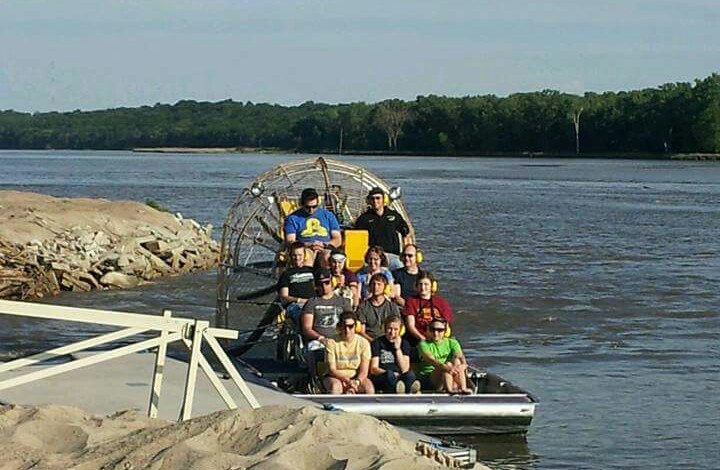
Riding an airboat! You can find me on the right in the burgundy tee

I love ziplining. But so far, I’ve never paid for a zipline experience. Working at camp has allowed me to enjoy this adrenaline rush for free whenever campers weren’t using it.
The events and experiences you’ll get to enjoy depend on what camp you go to, but here are just a few other things I got to do as part of camp work: play paintball, rock climb, walk high ropes, take the leap of faith, hold an alligator, ride airboats, jump off the high dive, play broomball on a frozen-over pool, and fly on a giant swing, just to name a few.

Shoulder Seasons are Your Vacation Time

Yes, camp work typically means giving up a good chunk of the most popular vacation time: summer. But that means you’ll also be giving up the high prices and large crowds that come with tourist season. Instead, try traveling before or after camp, when you might enjoy prime destinations for less, and maybe even have them all to yourself.

Learn Valuable Travel Skills

Gaining marketing and public relation skills… I’m in the middle

Working at camp doesn’t mean doing the same task all day, every day. You can lead a hike, plunge a toilet, perform a skit, and make a craft… all in the same hour! This means wearing many hats and learning new skills. Some of those skills will be beneficial in travel.

I know I’m a safer, healthier, and all-around more confident traveler because of the first aid and survival skills I was taught at camp. Camp also taught me more about cooking, budgeting, fitness, and getting by with few modern conveniences. All those skills have played a role in some way or another in my travels. Plus, many of my camp coworkers enjoy traveling as well, so we have exchanged some valuable travel tips.

Build that Travel Fund

Be warned, camps aren’t known as being a place that makes their employees rich. Your pay may be equivalent to less than three dollars an hour. However, all that money can go straight into savings. Think about it: at camp, your bed, food, and daily activities are covered. You may have a couple monthly bills to pay, such as for your cell phone or insurance, but those are relatively small compared to your typical monthly expenses. All you have to do is limit your spending at the snack shack and on your days off, and you’ll build a nice nest egg for more adventures (or whatever you want to spend it on)!

Satisfy that Travel Bug

I am furthest to the left, on a staff retreat with camp coworkers

This one may or may not work for you. Sometimes, camp encourages me to travel even more. Other times, it makes me fulfilled enough that I don’t feel the need to travel as much. If this doesn’t work, try exploring the surrounding area on your days off. This works especially well if your camp is far from your home.

Currently, I’m helping out with weekend retreats about twice a month. I still occasionally travel elsewhere, but it’s because I want to, not because I feel pressured to travel. If you work at a summer camp and enjoy it, try coming back throughout the year to work weekend retreats.

Another opportunity that may arise is that you could have the chance to travel with camp as part of your job. There are some adventure camps where staff take campers to all kinds of places. One way I’ve traveled with camp is by visiting other camps as a representative of my own camp, even going to multi-camp conferences in different states. Of course some business or training is involved, but that’s a small price for an all-expense-paid trip!

Inspire Others to Adventure

Camps make a difference. Many camps are also nonprofit organizations, so you can work for a cause you believe in. But you can also make a difference by encouraging the campers you work with to go after adventure. The world could use more travelers like you!

Have you ever worked or volunteered at a camp? (If so, tell me where!) What do you think is the best advantage to working at camp?


Photos were taken during my time at Camp Rivercrest in Nebraska. I’ve worked at 3 other camps and volunteered at countless more, but apparently Rivercrest provided the most photo ops!

resources, saving money

Travel: It Doesn’t Cost The Earth To See It

Picture Source

Traveling is an experience that everybody should make a priority on their bucket list. And you shouldn’t just go on the same old vacation to some sunny resort at a popular destination. Obviously, relaxing vacations are fun and you should allow yourself the luxury of getting a tan on a lounger from tan to time. But there’s so much to see in the big wide world that it seems a shame not to explore. Of course, your financial situation might be holding you back. But it doesn’t have to cost the earth to see it. Here are some ways to make travel more affordable.

Make a budget.

Before you go on your travels, you need to make a plan. Whilst that may sound boring, it’s important that you’ve thought about the financial element of your proposed trip so that you can be sure you’ve got enough money to cover everything. Once you’ve calculated the costs, you can figure out whether it falls within your affordable limits. But you shouldn’t have to compromise. You might need to raise additional funds if your budget won’t quite cover everything you want to see and do. Perhaps you have family or friends who are willing to help you out (especially if they’re traveling with you).

Of course, the thought of owing money to loved ones might make it hard for you to enjoy your travels even if they’re happy to give you a fair amount of time to pay them back. Whilst your credit score might not be great if you’ve struggled with your finances in the past, that doesn’t mean borrowing money is completely off limits. You could check out companies such as Evolution Money for secured loans that use your house as collateral. There’s always a way to prove you’re financially trustworthy in order to get the funds you need for your travels.

Visit public sites.

Of course, it isn’t too hard to find cheap flights with a quick Google search. If you wait for the right time of year then you’ll be able to find good deals to all those destinations you’re desperate to see. Still, the journey is only part of the cost of a vacation. You have to think about the costs that’ll be incurred whilst you’re traveling. When seeing towns or cities on your travels, you should strive to visit public sites for a free experience. Museums are obviously a good place to start; you’ll get to learn something about the culture and history of the place you visit without putting a dent in your wallet. National parks are also well worth visiting; you can’t put a price on seeing mother nature.

Picture Source

Work on your travels.

Finally, one of the best ways to afford your travels is to make traveling part of your career. You could become a tour guide in one of your favorite cities in the world and you’d never have to leave there. You could even work on a cruise ship if you’d rather be on the move and constantly traveling to new places. Not only do you get to see beautiful countries all over the globe but you get to be part of a friendly family of cruise ship workers who travel with you. Of course, there are numerous career opportunities all over the world; you could even look into volunteering abroad because many charities will cover your travel expenses.


Ednote: Just enjoyed a great, budget-friendly Thanksgiving day trip. Went with my family to snowshoe Crater Lake National Park- can’t wait to tell you about it!

resources, saving money, travel tips

11 Travel Hacks that Don’t Require Credit Cards 

Do you love the idea of getting flights, lodging, ground transportation, meals, and attractions for free or steeply discounted? Who wouldn’t want that! This is what makes travel hacking so enticing. But this can be too daunting when it comes to churning credit cards and running up a big bill. 

Never fear, there are plenty of travel hacks where owning a credit card is completely optional! Below are credit-free hacks based on my personal experience, as well as a few collected from others in my travel networks.

Last trip of the summer with a free trip to Lava Beds

Plan your costly attractions around free times.

I wish I would have kept records of how much I have saved with this one simple hack; it’s probably hundreds. In Madrid, I waited to visit the art museums until after 5pm, when they are free. I happened to be in Athens for a national holiday I didn’t even know about, yet celebrated with free admission to all the ruins, including Acropolis. I’ve had even more success stateside. I planned my San Francisco schedule around free admission times to Golden Gate Park’s attractions, found a rare free day to visit Omaha’s Henry Doorly Zoo, and I have gone on several trips to various National Park Sites on their free entry days. Just last month,  I was spelunking in over a dozen lava tubes at Lava Beds National Monument, and it only cost me the gas to drive there!

Camp in your car, even in Amish country! My Explorer in Holmes County, Ohio.

Make a bed in the back of your car.

When I first visited the Subaru dealership, I brought measuring tape with me. I wanted to make sure I was able to lay down in the trunk with the back seat down. If you road trip in a van or SUV, this could be a comfortable and cheap option for overnights. For me, I started doing this as a kid. Before getting my own tent for Christmas, I would often choose to sleep in the back of my dad’s Jeep Cherokee during family camping trips. My first car was a 2000 Ford Explorer. I bought it for about $1750, and made a large portion of that back in savings by sleeping in it at free campgrounds and WalMart parking lots. Since then, I’ve learned to fit an inflated air mattress in the back, how to make temporary privacy curtains, and that my favorite free spot to stay the night is casinos that allow RVs overnight. Just a few steps away, I have access to bathrooms, WiFi, and security!

Before arriving at Disney World that day, I responded to a medical emergency on my plane and got a free snack box. Apparently even more snacks were justified

Help others for airline perks.

Back when I was an EMT, I helped out with someone having an emergency while boarding our plane. Had this person stayed on the flight, the crew would have offered to refund my ticket to sit with her. Although this didn’t happen, a flight attendant gave me one of those super-expensive snack boxes I would never afford to buy myself. Megan Parsons shared, “this couple asked if they could help me because I am flying alone with a baby. I said yes and their boarding position jumped significantly.” Obviously opportunities like these don’t always arise, but it always helps to keep an eye out!

Even in Europe, you can find public toilets (and bidets!) for free

Use free toilets.

“Go when you can, not when you must.” I heard this from a NYC tourguide ten years ago, and it’s stuck with me as a useful, albeit awkward travel motto. Of course needing to use the bathroom when there isn’t one available can result in ruined clothes, laundry expenses, smelly luggage, and embarrassment. I’ve pointed several visitors to free bathrooms in a small tourist town near where I live, and look out for free restrooms while I travel. This tip is especially useful in areas where most public toilets cost money, since they’re still usually free at restaurants, paid attractions, churches, trains, and porta potties. (Bonus tip: always carry a pack of travel tissues. Your stall may be out of toilet paper, and in some countries the stalls don’t always have toilet roll holders!)

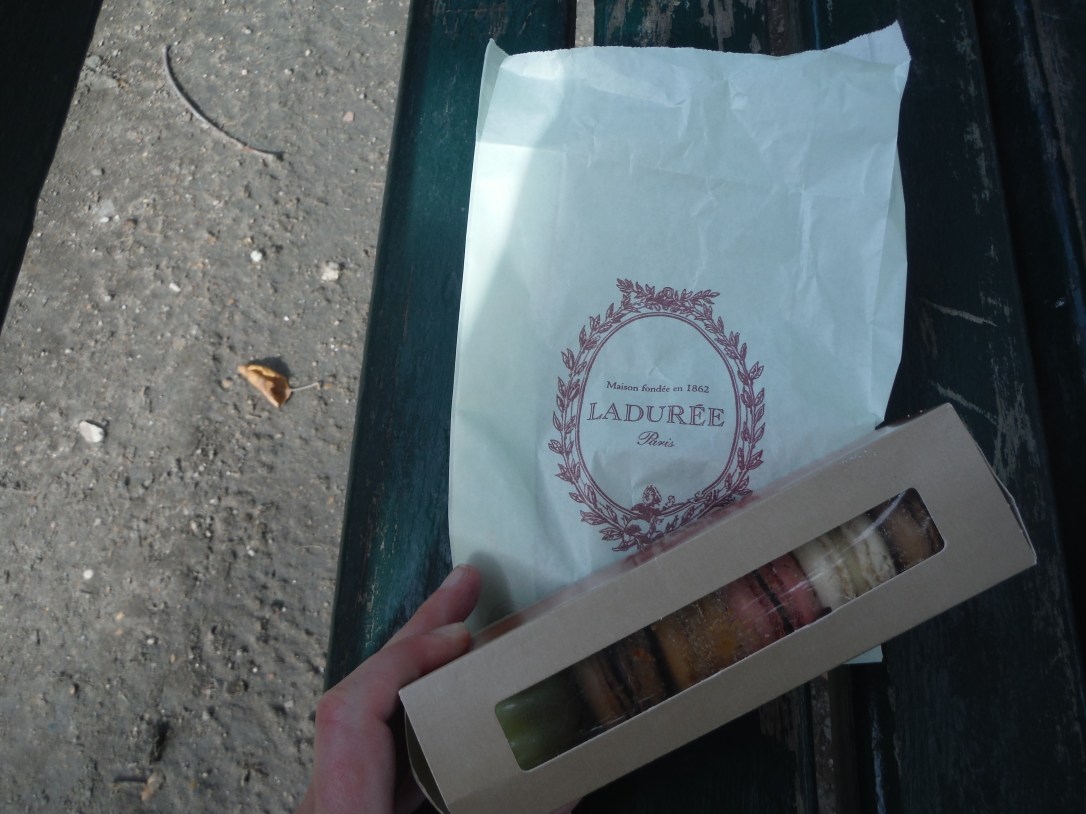
I even brought Laduree macarons home from Paris in my carry-on so my family could taste them.

Get free food and drinks in the airport with this simple tip.

We know that the shops and restaurants in airports are overpriced. But do you know how to get food and drinks past TSA security? More and more people are realizing that you can bring an empty bottle and fill it with water once past security, instead of dropping several dollars for a disposable plastic bottle. (If you do forget your water bottle, some airport fast food places might give you a free water cup.) You can add single-serve flavor packs if you wish. As for food, it’s totally okay to go through security as long as it doesn’t contain many liquid-based components. (Mustard on a sandwich should be fine; a heavily-frosted cupcake is a no-go.) You don’t even have to fit your food in your carry-on or personal item as long as it’s consumed before boarding. 

I planned my entire Tennessee trip around a good airline deal.

Find mistake fares and airline sales. 

Stephan Mark Smith shared, “Check each day until you find a mistake fare.” While I personally have yet to find a mistake fare, I did take advantage of a cheap airline sale a few years ago. As long as you’re not too picky about your destination, you could plan a great trip around a cheap flight!

Last year I found a gift certificate on Groupon to take my family to Trees of Mystery

Fund your trip with gift cards.

Just about every aspect of travel can be paid for with a gift card. If you have partially- used gift cards lying around, get creative and brainstorm how they can be used towards upcoming travels. For everything else, check out Swagbucks. Many people think of this site as a rebate program. But I promised that none of these travel hacks require a credit card, and this one doesn’t have to, either. On Swagbucks, you can earn points by watching videos, playing games, taking surveys, and my favorite, using a search engine. These points then translate into gift cards for gas, hotels, cruises, restaurants, Groupon, and more. You even get free points just for signing up!

Do an online search before booking tickets or making a reservation. You could find steeply discounted prices to places like Wildlife Safari.

Check the fine print on coupons.

Between free travel gear and free souvenirs, this hack has saved me a lot of money, and provided me with wonderful things I never would have gotten if I had to pay for them! I ignore most coupons because their stipulations require me to buy something I don’t need. But years ago, while backpacking Nashville, I found a coupon that offered $3 off at a local candy store- no minimum purchase!  I even surprised the cashier when I got a $2.50 nut log for free. Since then, I stay on the lookout for coupons offering free food, free souvenirs, and free gear. I also like stores that allow coupon stacking or using coupons on already-discounted items. My favorite coupon right now is the $10 rewards coupon I get from Eddie Bauer twice a year. I have to spend at least $10 to get $10 off, but it’s still a good deal for useful gear and clearance items!

Books make wonderful cheap, unplugged entertainment for camping trips. And that’s just one free thing you can get from the library!

Visit your library before leaving.

A library is more than books. When planning my trip to Europe, I learned about Rick Steves, and wanted more of his advice than what was offered online and on PBS. I went to the library and found his Europe Through the Back Door guidebook as well as a few seasons of his show on DVD. Of course my rental time wasn’t long enough to bring these with me in Europe for 90 days, but I could take notes on the most useful information for me. For shorter trips, a borrowed library book is great for downtime, as long as you make sure not to lose it. With a lot of weekend road trips I’ve been taking lately, I enjoy getting an audio book or two from the library to listen to in the car. I’ve also taken periodicals from the free magazine rack. Your library may have other perks that benefit travel as well.

Soda was just one of many sponsor freebies at Paris’ Tour de France street fair!

Double up on freebies at events.

Some of my favorite travel memories have been at free local events. I went to some of these at the advice of a local person or fellow traveler. Others I stumbled onto completely by accident. Either way, you’re likely to find a free concert, play, or street fair, especially in large cities. Not only is the event free, but you can often double up on freebies at events like this since the sponsors often give free items away. This could mean food, apparel, pens, and other items that make excellent souvenirs.

Upsides of a totaled car: massages, rentals, cash for a new car…

If something goes wrong, cash in on all you can.

I definitely would not recommend getting into a car crash as a way to travel hack. With recent personal experience, it’s a hassle, it’s costly, and it can ruin the joy of travel, at least temporarily. But if something like this does happen to you, milk it for all it’s worth. My favorite car crash perk has been the free massages and chiropractic adjustments, especially helpful since my health insurance ended just a couple weeks after my crash. You can enjoy this benefit even if you were only a passenger in a crash. When I got my rental car, I planned a weekend getaway to Redding, California. While I paid for the gas, the rental was covered by insurance, and it didn’t add mileage to my own car. Speaking of mileage, since my car was totalled before its warranty ended, I got most of it refunded. While each situation differs, look into what’s available in the event of an unfortunate incident involving a car, plane, hotel, restaurant, event, or attraction. Don’t be demanding or threatening, but be sure to get what you’re owed.

What travel hacks have you done? Let me know in the comments!